
• Skip to primary navigation
  • Skip to main content
  • Skip to primary sidebar

Robbins Farm Garden

A Cooperative Learning Project

  • About the Garden
  • Membership & Rules
  • Veggie School
  • Local History
  • Contact Us
  • 2022 Crops List
  • 2022 Garden Plans
  • 2022 Garden Schedule
  • 2022 Photos
  • 2022 Finances

Hornworm returns

July 29, 2012 by Lisa

HornwormSphinx moth

A sphinx moth has dropped by the garden once again. That’s the parent of the hornworm caterpillar Lisa found munching last week on one of our green tomatoes.

The hornworm looks like something out of a medieval fairytale. It’s bright green with slanted white stripes and dark eye-spots on its sides and a curved black horn extending out from its rear end.

Because their coloring is so close to that of the plants they visit, hornworms can be hard to spot at first, clinging as they do to the underside of the branches they defoliate. But once you see one, you think you’re looking at a miniature monster.

A hornworm brigade attacked our tomatoes two summers ago. Fortunately, however, right behind them came a flight of parasitic wasps launching a counterattack of their own. They stopped most of the hornworms in their tracks, but not before the little monsters had stripped bare the tops of several tomato plants.

So far this summer, we’ve spotted just one horn worm, and no parasitic wasps.

Curiously enough, this time the hornworm did not go for the tomato plant’s leaves. This time Lisa found him munching on a tomato.
 

Filed Under: Uncategorized Tagged With: tomato

Top 5 Things to Know About Corn Pollination

July 28, 2012 by Mike Smith

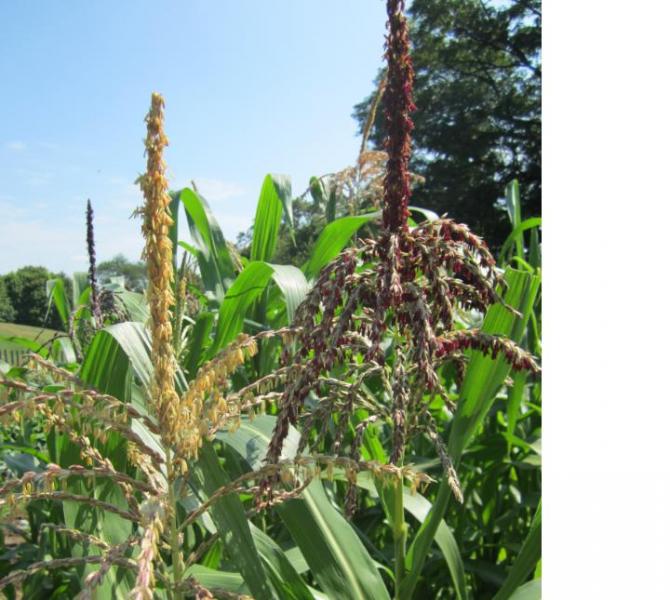
Most of the corn plants in our Three Sisters bed have reached the tassel stage, and some of them have also reached the silk stage.  This is important, because corn has both male and female parts — that is, the silk and the tassel. 

Alan was nice enough to snap this photo of the golden and red tassels formed on our popcorn plants:

Proper soil moisture, as well as air temperature, are both critical to having both the tassel and silk appear at the same time, and therefore create the proper circumstances for successful pollination.  Many of our crop plants are pollinated by insects, (e.g., bees, wasps, moths and ground beetles), but corn is different.  The corn plant depends on wind to carry the pollen from a tassel to the silk strands that form at the top of each potential ear of corn.

For more info, click here for the Top 5 Things to Know about Corn Pollination.

Filed Under: Uncategorized

A Quinoa Recipe for Fresh Summer Corn: Definitely a “Keeper”!

July 28, 2012 by Sue


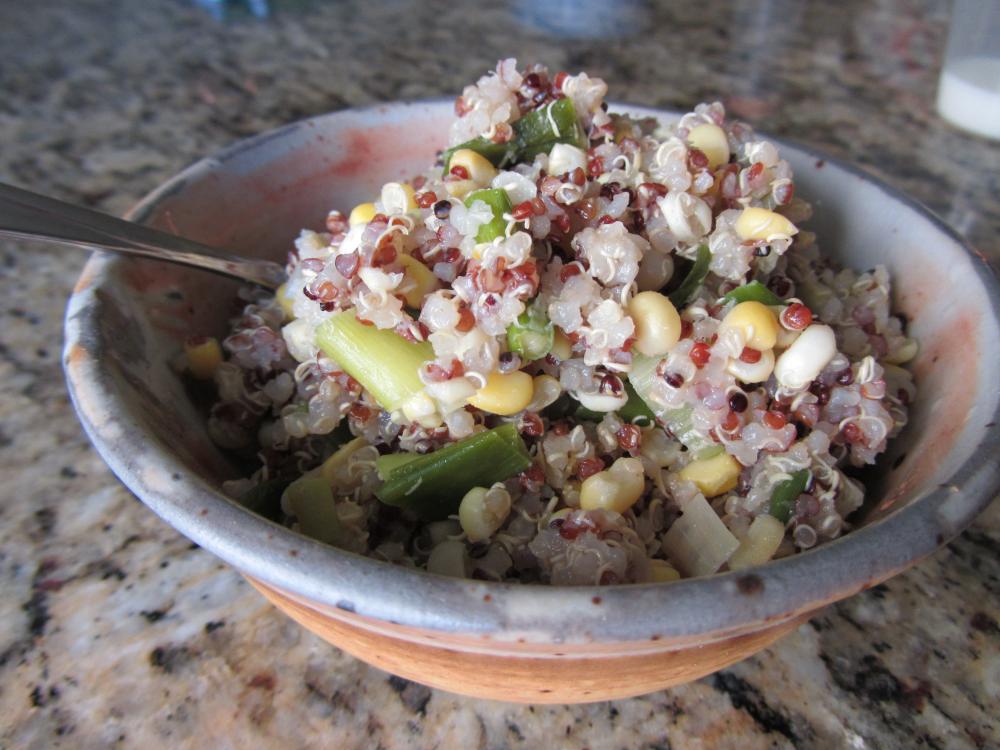
When sweet corn is in season — as it is right now — we eat a lot of it.Usually, we are corn purists: just boil it quickly, sprinkle it with salt or Campmix, and eat it right off the cob.  Yesterday, though, I wanted to try something different with our sweet corn, fresh from Busa’s Farm.(In the Robbins garden, the corn in our Three Sisters plot is a decorative popping corn so we can’t use it for this recipe.) With the corn, I bought a bunch of gigantic, freshly picked scallions, also grown at Busa’s.

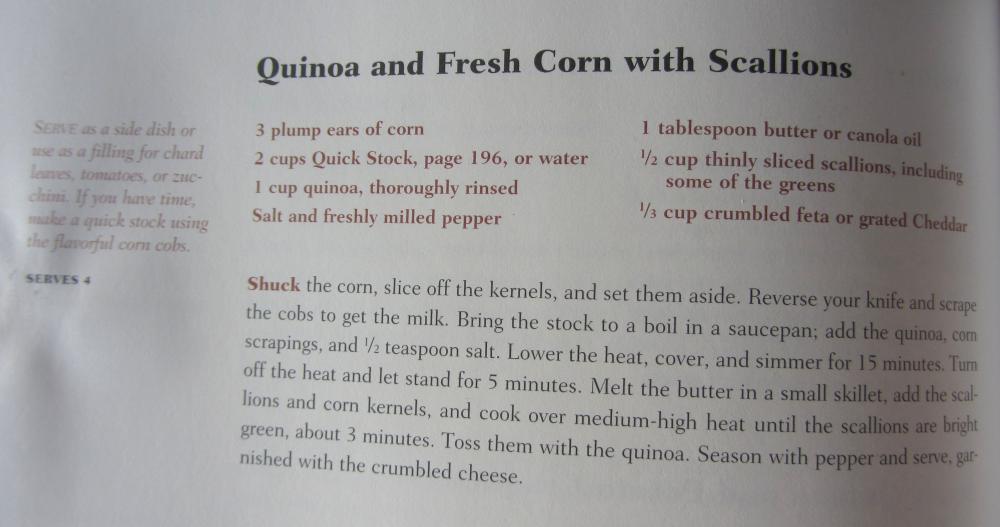
The recipe, Quinoa and Fresh Corn with Scallions is from Deborah Madison‘s “Vegetarian Cooking for Everyone”.(Highly recommended book, by the way!) A photo of Deborah’s recipe is shown, but I varied it slightly. I used more vegetables: 5 ears of corn and 3 of the huge scallions. Instead of the Tbsp butter or canola oil, I used 3 Tbsp Extra Virgin olive oil and 1 tsp butter. I also sauteed the corn and scallions longer than the recipe recommends, til the scallions were wilted. I used an organic tricolor quinoa from Trader Joes. I thought this would be good, but didn’t think it would be SO good. John (who is really into corn in its “purist” preparation and also does not get very excited about some of the grains I like) loved it! We didn’t even add the cheese that the recipe suggests — it was delicious all by itself, seasoned with salt and pepper. We had it as a side dish with grilled fish. By the way, the beautiful bowl in the photos was made by my friend Amy Goldstein, at Mudflat Studio.

Filed Under: Notes to the Future

A Day in the Garden

July 28, 2012 by Alan

It started cloudy, but as gardeners arrived, the sun came out in full force.  Despite being past 9AM, the far left corner still had a bit of shade from the tall trees at the edge of the Park.

A white board of to-do activities, prepared by the planners, organizes our work.  It’s harvesting time!  Lush eggplant of both the long Asian and the fat Italian varieties are joyfully picked.  Bush beans of all three colors –green, yellow, purple– are available, but the soybeans are not yet ready.  Some summer squash, several cucumbers.  A debate ensues over how much lettuce to pick, as what we may leave behind may bolt or turn bitter in the hot weather.  Our next generation of seedlings were only planted last week, so are not ready for transplant to take the place of the picked lettuce.  We also planted more lettuce today.  Collard greens are plentifully abundant, although many gardeners prefer the swiss chard.

There is much promise of more to come.  The tall corn displays purple and golden tassels.  Immature pumpkins and watermelons hide in the trellis of leaves.  We added more support (netting them with plastic mesh) to some of them.  The winter squash has plenty of flowers, and the Jerusalem artichokes are blooming.  The sunflowers seemed to have shaken off the early-season leaf eaters, and are climbing high.  And even the weeds are prospering, encroaching from the paths even as the vegetables encroach onto the paths.  We’ll have to do something about that.

We applied a spray of a small amount of potassium bicarbonate mixed with water to the squash and watermelon plants.  Unlike the last two years, we’ve seen no mildew, so getting an early start at prevention seems to have worked.  We did a pH test of the soil near the tomatoes, and added some lime.  We’re watching closely for signs of blossom end-rot.

Given yesterday’s rain, the compost was deemed too wet to sift and extract, even though one pile is clearly ready.  Instead, we turned both piles, to feed them air.

Water, water, water, says one of the garden planners, who says the fruiting plants (e.g. tomatoes and eggplants) especially want it.  No one saw any pests, like the tomato horn worm of last week, and we have some bees buzzing around our flowers.

Not everything picked is 100% perfect.  One tomato did not pass the eat-me test.  Some parsnips decided to stop growing down after they encountered some rocks.

The biggest surprise of the day was the lack of visitors.  Normally we get about twenty, divided between adults and children.

As the white board gets all checked off, people gather for tea, and we start the divvy-up process, a mix today of some things in piles and other things (like greens) taken in turns.  Herbs like rosemary and chives are taken separately by those who want them.

As we finish near Noon, the sun decides to go behind the clouds again.

Filed Under: Notes to the Future Tagged With: eggplant, tomato

Our raised bed

July 19, 2012 by MichaelP

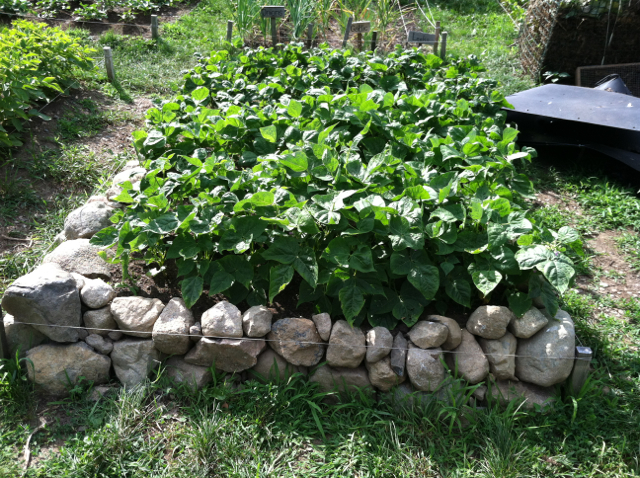
When we expanded the garden between years one and two, we added a parcel with a drop in elevation that was evident the day we paced out what our request to the Rec department would be.

It turns out that the drop is about 16 inches, as measured early this season by Alan Jones and I (mostly Alan). We weren’t seeking data for its own purpose, but to assess how high to stack stones to make a level bed in our southeast corner.

We found the rocks, it should come as no surprise, while double-digging other beds (which may well be my next blog-post topic). Just for this one bed, whose walls fade away to nothing about two-thirds up the slope, we used not only most of the big rocks we excavated this year, but reclaimed some we’d relocated along the park perimeter.

The stacking is as rudimentary (skill-less) as you can imagine. Steven Lee and I put the biggest rocks in the corners, the next largest along the bottom row, and for the rest, tried to match shapes that “interlocked” as best we could. We can say that, so far, the rocks are still standing.

One reason we wanted to try the raised bed is that last year, downhill flow during a rainstorm actually washed away some garlic we’d planted. By making a level planting field, we thought could mitigate, or redirect, any such future torrents. And, it looks nice, in a rustic, New England sort of way.

Filed Under: Uncategorized

Holy Herb, Batman! It’s Holy Basil!!

July 16, 2012 by Elisabeth

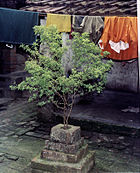
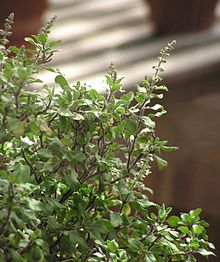
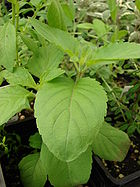
Holy basil, or Tulsi, (Ocimum tenuiflorum) is a plant that I would like to recommend for growing in our garden next year, both as a culinary herb, and as a medicinal.


Holy basil is used for treating the common cold, influenza (aka”the flu”), H1N1 (aka “swine flu”), diabetes, asthma, bronchitis, earache, headache, stomach ache, heart disease, fever, hepatitis (viral), malaria and tuberculosis.  It is also used to reduce stress, to treat mercury poisoning, to promote longevity, as a mosquito repellent, and to counteract snake and scorpion venoms.

Note:  Holy Basil (Ocimum tenuiflorum) should not be confused with the more commonly grown basil varieties such as Genovese (Italian), Purple, Cinnamon, Nufar, Pistou, or Sweet Thai,  (Ocimum basilicum), Lemon (Ocimum basilicum citriodora), or Lime (Ocimum americanum).

(See Johnny’s Selected Seeds)

For more info on Holy Basil:
1.    www.webmd.com/vitamins-supplements/ingredientmono-1101-HOLY%20BASIL.aspx
2.    www.youbeauty.com/health/columns/whole-beauty/holy-basil-for-stress
3.    www.holy-basil.com/

Filed Under: Uncategorized

« Previous Page
Next Page »

Primary Sidebar

2026

  • 2026 Crops List
  • 2026 Garden Plans
  • 2026 Garden Schedule
  • 2026 Watering Schedule
  • 2026 Photos

2025

  • 2025 Crops List
  • 2025 Garden Plans
  • 2025 Garden Schedule
  • 2025 Watering Schedule
  • 2025 Photos
  • 2025 Finances

2024

  • 2024 Crops List
  • 2024 Garden Plans
  • 2024 Garden Schedule
  • 2024 Photos
  • 2024 Finances

2023

  • 2023 Crops List
  • 2023 Garden Plans
  • 2023 Garden Schedule
  • 2023 Photos
  • 2023 Finances

2022

  • 2022 Crops List
  • 2022 Garden Plans
  • 2022 Garden Schedule
  • 2022 Photos
  • 2022 Finances

2021

  • 2021 Crops List
  • 2021 Garden Plans
  • 2021 Garden Schedule
  • 2021 Photos
  • 2021 Finances

2020

  • 2020 Crops List
  • 2020 Garden Plans
  • 2020 Garden Schedule
  • 2020 Finances
  • 2020 Photos

2019

  • 2019 Crops List
  • 2019 Garden Plans
  • 2019 Garden Schedule
  • 2019 Finances
  • 2019 Photos

2018

  • 2018 Crops
  • 2018 Garden Plans
  • 2018 Garden Schedule
  • 2018 Photos
  • 2018 Finances

2017

  • 2017 Crops
  • 2017 Garden Plans
  • 2017 Crop Schedule
  • 2017 Photos
  • 2017 Finances

2016

  • 2016 Crops
  • 2016 Garden Plans
  • 2016 Crop Schedule
  • 2016 Finances
  • 2016 Expenses

2015

  • 2015 Crops
  • 2015 Garden Plans
  • 2015 Crop Schedule
  • 2015 Finances
  • 2015 Expenses

2014

  • 2014 Crops
  • 2014 Garden Plan
  • 2014 Crop Schedule

2013

  • 2013 Crops List
  • 2013 Garden Plan
  • 2013 Crop Schedule
  • 2013 Photos

2012

  • 2012 Crops
  • 2012 Garden Plan
  • 2012 Crop Schedule

2011

  • 2011 Crops
  • 2011 Seeds
  • 2011 Garden Plan
  • 2011 Expenses
  • 2011 Project Proposal
  • 2011 Supporters

2010

  • 2010 Crops
  • 2010 Seeds
  • 2010 Expenses
  • 2010 Supporters
  • 2010 Veggie Adoptions
  • 2010 Pilot Project Report

Recipe Collection

Log In

Members Only

  • Contact information
  • Log Out

Copyright © 2026 · Genesis Child Theme for Robbins Farm Garden on Genesis Framework · WordPress · Log in