
Re: Acidity, Asthma, Blood Circulation, Bronchitis, Cancer, Constipation, Dyspepsia, Gall Bladder, Gall Stones, Gallstones, Gastric Problems, Headache, Headaches, Insect Bites, Jaundice, Kidney, Kidney Disorder, Kidney Infections, Leucoderma, Liver, Nausea, Obesity, Piles, Respiratory Problems, Skin Care, Skin Infections, Skin Problems, Sore Throat, Urinary Tract, Weight Loss
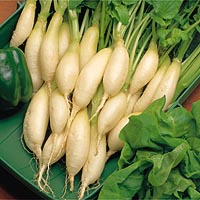
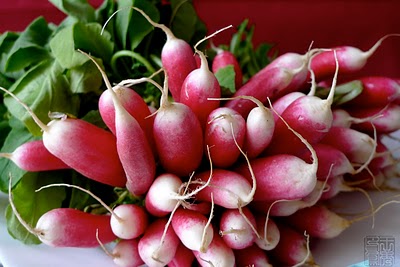
Radish, the well-known salad ingredient, is a juicey root crop, pungent or sweet in taste. Radishes can be white, red, purple or black, long-cylindrical or spherical in shape. They are eaten raw, cooked or pickled. The oil obtained from the seeds is also used. The other parts of radish which are consumed are the leaves, the flowers, the seed pods and the seeds. The scientific name of radish is Raphanus Sativus, which belongs to the Brassicaceae family. Radish is also known as Daiken in some parts of the world.
For the huge health benefits of relishing radishes, click here.

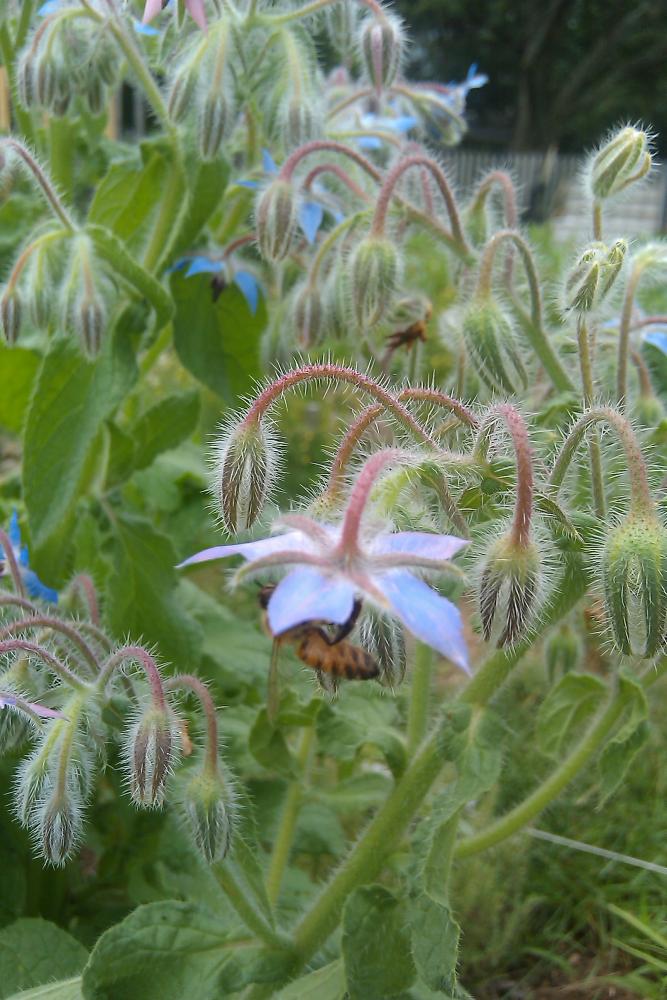 joined one of our two herb beds at the end of April, when we redug and redesigned them. It’s already a hearty bush, about three feet tall and right now in heavy bloom. Known also as "starflower", its blooms appear on the plant in both blue and pink versions–apparently younger and older flowers. The honey bees are enjoying the plant immensely; the plant is known for producing good honey, and we’re always happy to see pollinators in the garden. We’re just learning about borage, since it isn’t commonly found in North American herb gardens. It’s a probable native of North Africa that has spread across Europe, Asia Minor, the Mediterranean, and South America. Borage is apparently easy to grow from seed, but we acquired our plant from Mahoney’s; it’s an annual that is said to reseed itself easily, so we won’t need to shop for it next year.
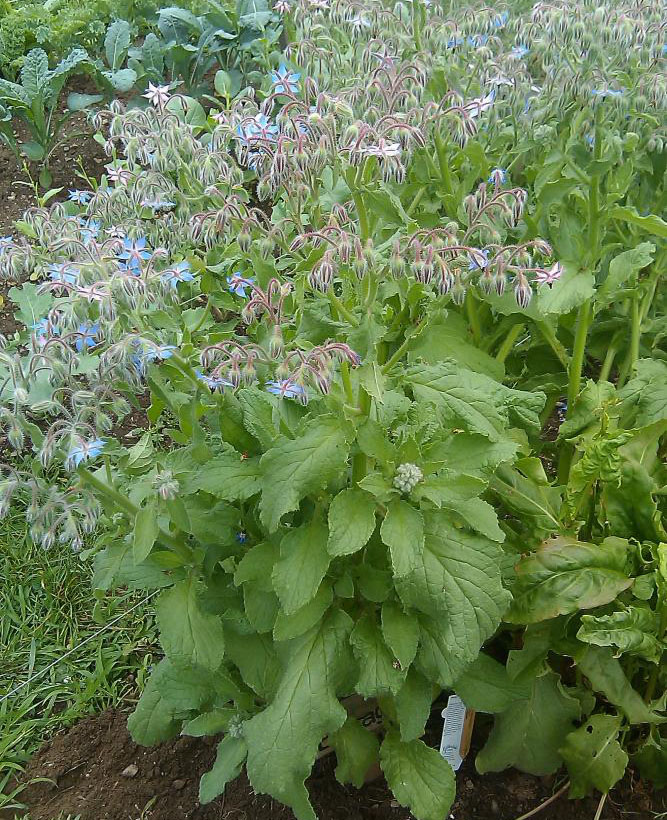 Beyond its kitchen garden uses, the plant’s seed oil is a rich source of gamma-linolenic acid (GLA), an omega-6 fatty acid found chiefly in vegetable oils. This fatty acid is found as a dietary supplement said to treat inflammation and auto-immune diseases like rheumatoid arthritis. Finally, borage is a traditional garnish in the Pimms Cup cocktail, the expected beverage at your neighborhood polo match or Wimbledon.
