Where: Arlington’s Community Safety Building (police station), 112 Mystic St, upstairs meeting room
When: Saturday, February 26, 2011, 9AM-noon
A Cooperative Learning Project
by Elisabeth
Where: Arlington’s Community Safety Building (police station), 112 Mystic St, upstairs meeting room
When: Saturday, February 26, 2011, 9AM-noon
by Elisabeth
Because we are returning the garden back to the Park for the winter, the remaining compost was bagged to be taken away. But first I sifted it to extract usable soil, and got nearly a wheelbarrow full! This from two months, the second of which I turned it naught, and it suffered from low night temperatures (which slow decomposition).
The sifted compost was spread over the empty garden and raked in. The remainder filled over a bag, which then had to be divided amongst several bags because of its heaviness.
by Elisabeth
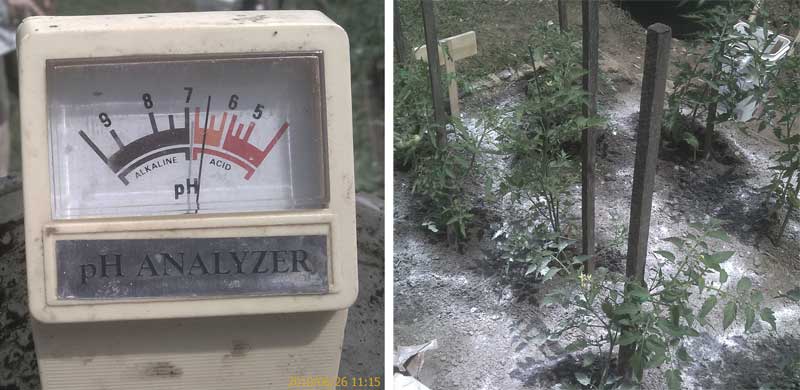
When we first opened the garden, we had the soil tested, and the pH (acid/alkaline balance) was very low, about 5.8. We added 170 lbs of lime when we dug it up – about 17 lbs/100 sf. We checked the soil again on June 26 in a few spots around the garden, and the pH was around 6.6, which is just about perfect for most vegetables. It takes a while for the lime we added in April to change the soil chemistry, so we wanted to verify that we’d added enough. Every time it rains, the soil becomes a little more acid, so we need to keep checking and adjusting throughout the season.
We lightly dusted lime around the plants that have a sweet tooth (cauliflower, broccoli, tomatoes, beets and greens). Some plants (potatoes, eggplant) like it a bit more acidic, so we did not add any lime to those beds.
We used calcitic lime (plain ordinary powdered limestone, or calcium carbonate) because it adds a quick shot of calcium to the soil, to help prevent blossom end rot on the tomatoes.
Soil pH is important because plants won’t absorb nutrients from the soil as well if the pH is too high or too low. A good introduction to soil pH is here, on the UMass Extension web site.
Did you know that farmers used to check their pH by tasting the soil?

by Elisabeth

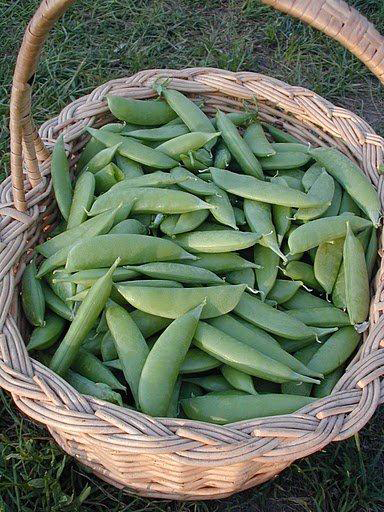
We’re getting into the peak of pea season. We had a good harvest on June 23, 63 days after planting. Fresh peas right off the vine are becoming a visitor favorite. Lots of folks have never tasted a fresh tender young pea pod that’s never been refrigerated. "Extreme Locavore".
by Elisabeth

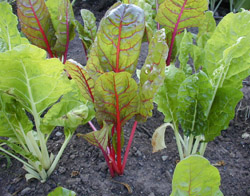
This is our second week of leaf harvest (day 57) on the swiss chard. Compared to the mammoth leaves in the supermarket, ours are younger, sweeter and more tender (basically, better in every way). They require very little cooking and the brightly-colored stems are particularly lovely in a stir fry.
A few of the transplanted and otherwise smaller plants are not quite ready for a leaf harvest. However, the discrepancies in size are lessening as the season progresses.
by Elisabeth
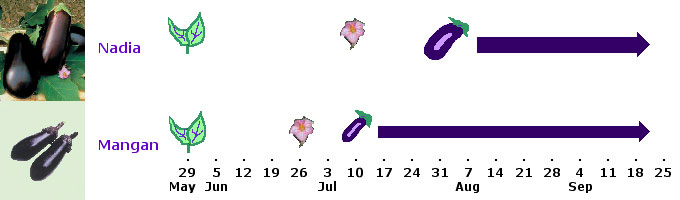
We planted two varieties of eggplant this Saturday. One is Nadia, a zaftig, Rubenesque traditionalist from southern Europe. The other: Mangan, a darker, more svelte and modern variety from eastern Asia.
Both are beauties; and each has her fans. Both are also prima donnas. They abhor cold soil. So Nadia grew to seedling state in a greenhouse over at Waltham Fields, a few miles southwest of us, while Mangan got her start at Busa Farm, just over the town line in Lexington.

According to studies we found on the net, these two varieties should enjoy an interesting competition this growing season. Mangan is the speedy one. She should flower in as little as 4 weeks, then produce her first fruit 2 weeks after that. Nadia unfolds at a slower pace. She should lag Mangan by a couple of weeks in coming to full flower and another 3 weeks in bearing fruit.
But her fruit will be bigger, their shape more fetching to the eye. Pound for pound, Nadia should also end up producing more edible flesh per plant, though Mangan should best her in the number of individual fruits produced.
All in all, for those of us attending these two, this should be a lively competition to watch.