Let’s start with the soil prep. We started preparing the soil last Saturday, the 17th. That was when Mike and Alan dug up the plot with with a motorized rotary tiller. Then yesterday, to loosen it up still further down — to about 10 inches or so — we went at it with our garden forks. Since collards produce tap roots as long 15 to 18 inches, we hope this first 10 inches of fluffed-up soil gives them a good start.
The results from the Ag Center at U Mass Amherst told us the soil was pretty anemic and too acidic. To fortify and sweeten it, we mixed into it a good deal of compost, some dried-out chicken poop and cow manure, plus what seemed like a ton of pelletized lime.
Now the planting. For the collard greens, we planted three rows of seeds. They’re in the center of a 6 x 9 foot section that plays host on one side to Swiss chard and on the other to two varieties of kale, the collards’ closest cousin.
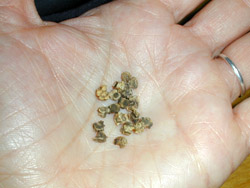
Seeds for collard greens are tiny. We spread them fairly densely along their three rows, with the idea of thinning the less successful seedlings out later.
Then we covered the seeds with about 1/2 inch of dirt and watered each row with a sprinkling can, so as not to disadvantage any of our promising young contenders.
Seeds for collard greens are said to germinate fairly quickly. So we expect to see their sprouts some time next week or the beginning of the week after that.
This type of collards — Georgia, from Burpee — is supposed to reach full maturity in about 75 days. That means the first or second week in July. We’ll start harvesting leaves, though, probably a good month before that.
Speaking for myself, I love collard greens, though I’ve never grown them, never cooked them. We’ve always gotten our collards, Saturday afternoons, at the basement kitchen of the United House of Prayer for All People, on Seaver Street in Dorchester. Great soul food there.
I look forward to trying my own hand at fixing collards. But I doubt they’ll be nearly as good.
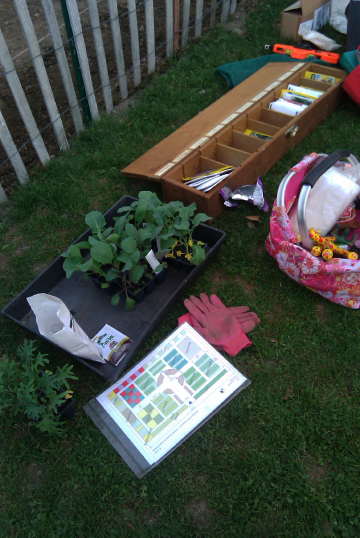 We gathered for our first evening gardening assignation, nice temperature, post- and pre-rain so a perfect window. We put in the beautiful seedlings from Waltham Fields Community Farm, lettuces and kale and caulifl
 ower and broccoli, and we planted peas from seed, both bush- and pole-types.
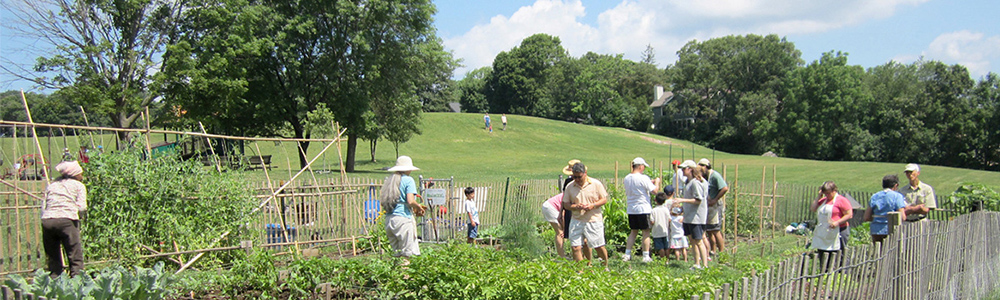
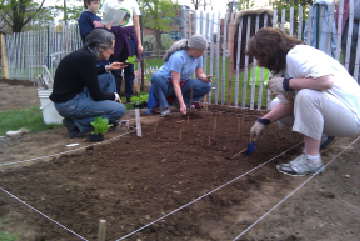
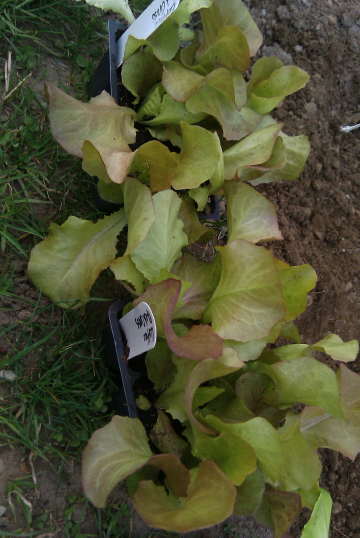 It was a busy plot! And everyone had something to do. Digging a little deeper
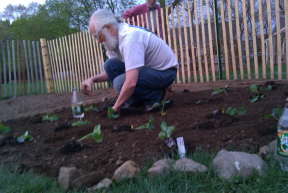 than the rototiller had gone, we even had another major boulder for young Desmond to roll away. Lisa had fortuitously assigned herself the water-bearing so we had some moisture to give the seeds and seedlings; thank heavens she hadn’t recycled those plastic bottles, clever girl. A few more sympathetic visitors came by with good wishes. By the time light was vanishing we had everything in and could part hoping the rain would come on Earth Day (which it did, with noise and fury).
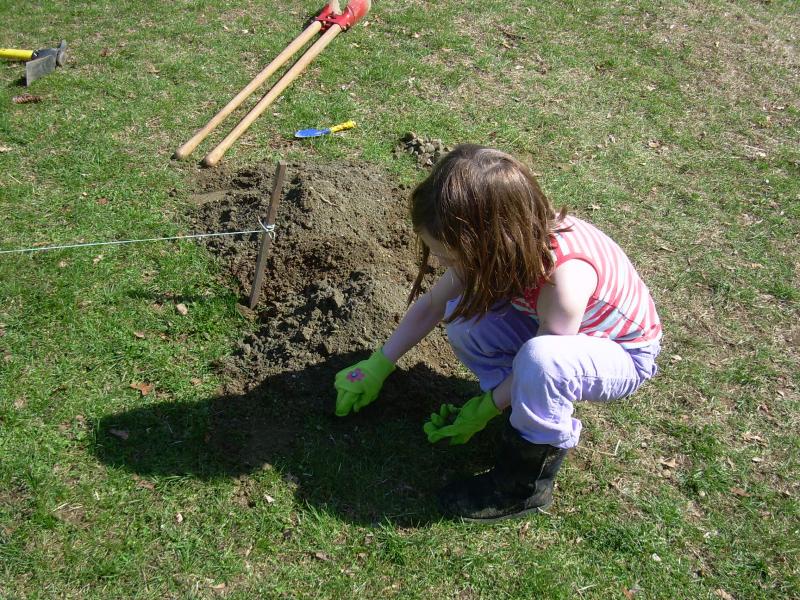
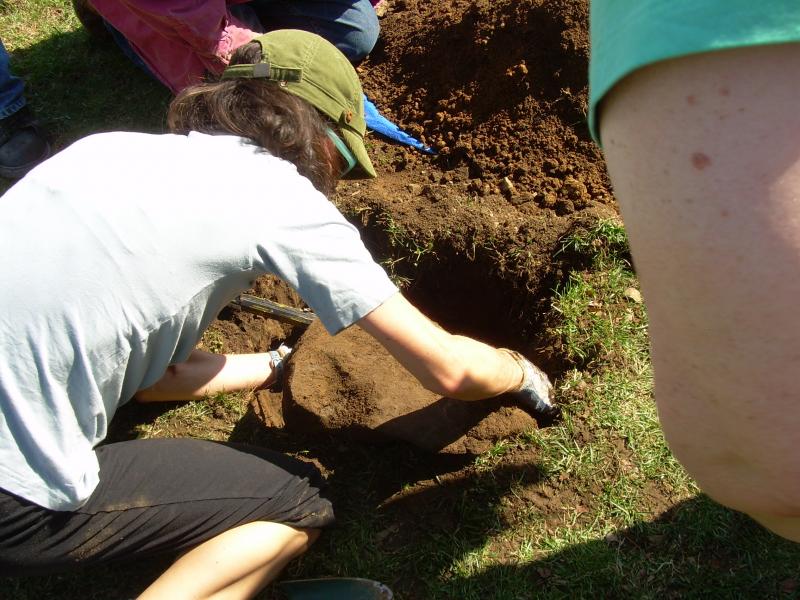 and was dislodged from exactly where we needed a corner post to go. It graces the garden’s center, for the moment. Everyone had a shot at digging, our youngest participants bringing especial gusto to the enterprise (thank you, Lauren, Shannon’s daughter and Desmond, Mary Ellen’s son!).
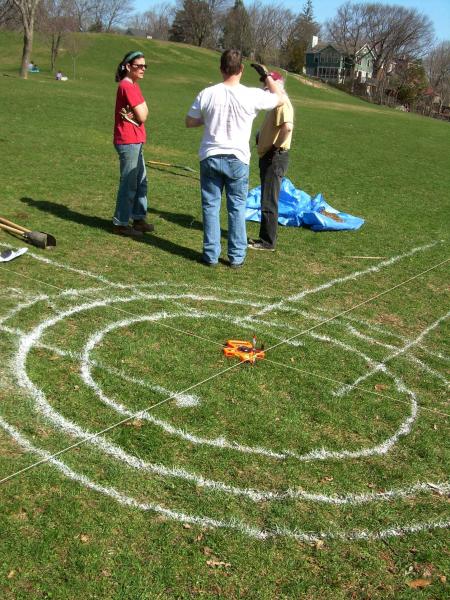
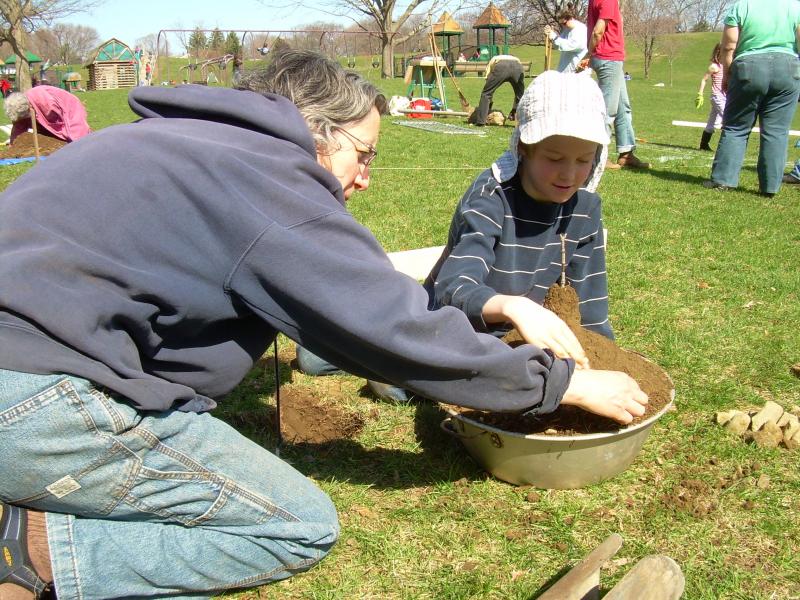 Meanwhile the lines for paths were laid out with our favorite dessert topping, spray-chalk-in-a-can, and removal of sod could begin. Erika developed
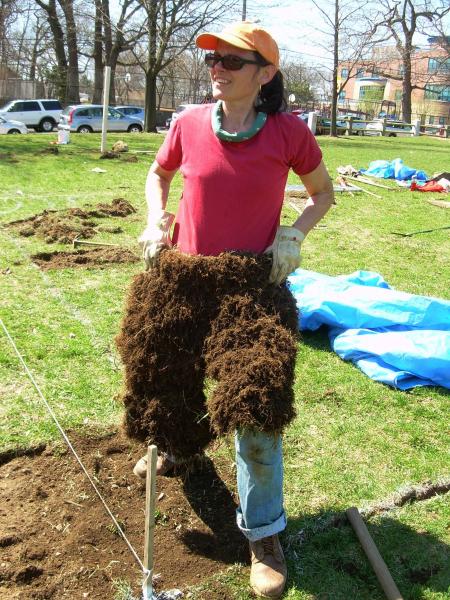 a technique for removing strips of rolled-up sod, and Steven and Dick carted it away to build a golf course just east of the garden (not really–they were filling in sinkholes that create drainage issues for our neighbors to the east).
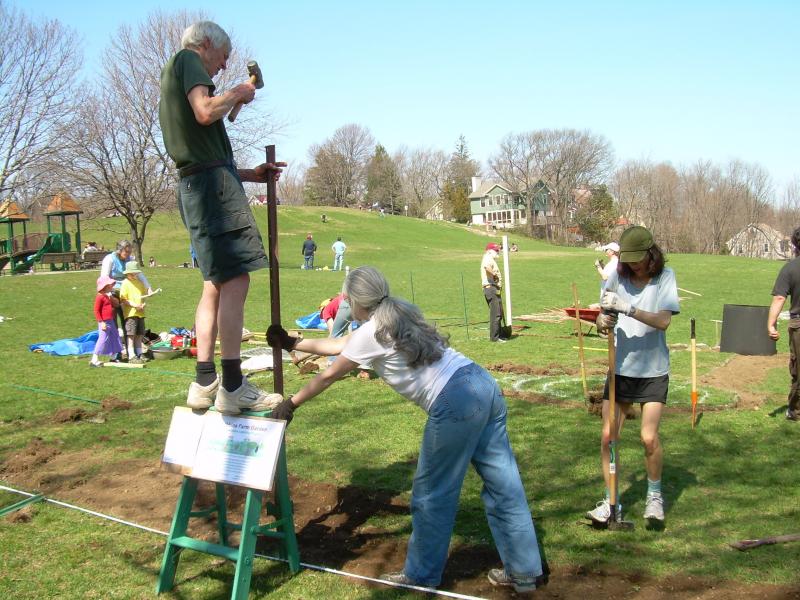
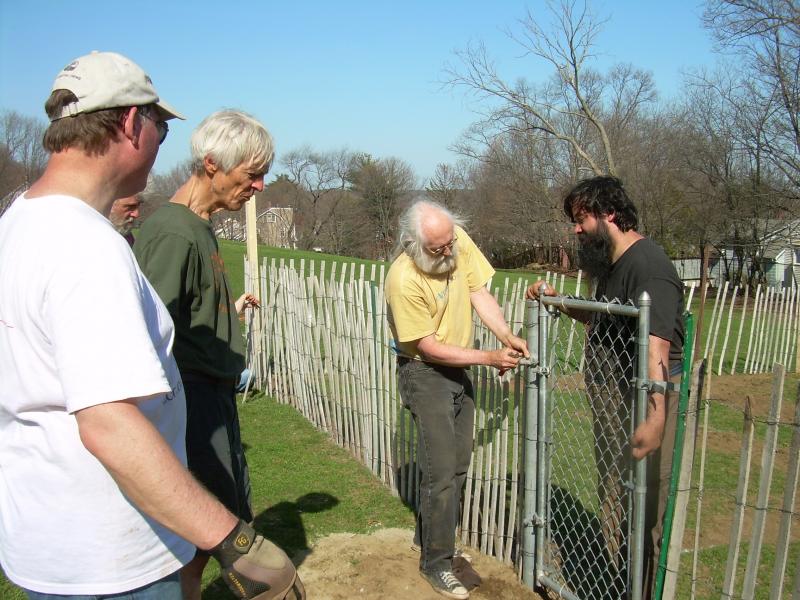
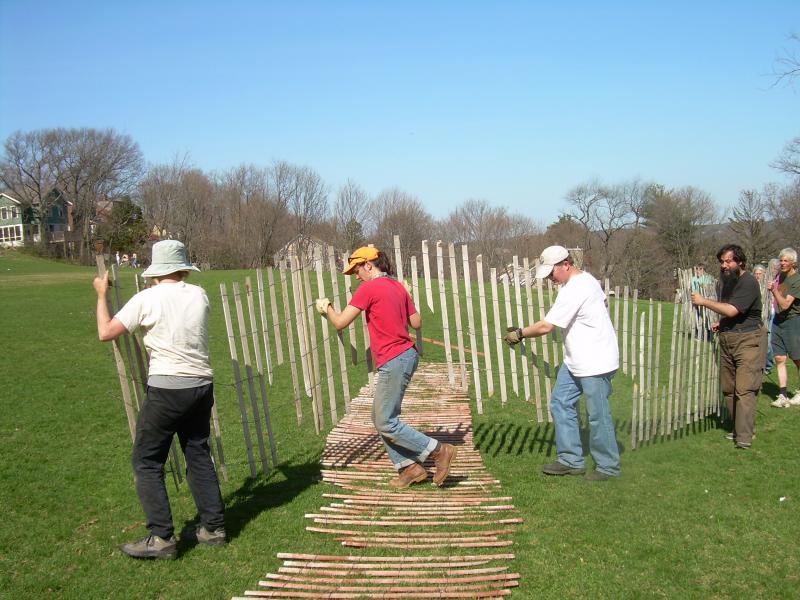 Meanwhile Alan and Mike and Steven worked to get the salvaged gate in place. With only one nut missing, and a beautifully seated post complete with its own attached concrete hunk, it isn’t going anywhere. Oakes and Elisabeth pounded in stakes for the fence, avoiding calamity with the beautiful green but rickety stepladder. Oakes exhorted Melanie to take photos a la paparazzi which she found not quite in her nature; nonetheless, 90 were taken.