• Skip to primary navigation
  • Skip to main content
  • Skip to primary sidebar

Robbins Farm Garden

A Cooperative Learning Project

  • About the Garden
  • Membership & Rules
  • Veggie School
  • Local History
  • Contact Us
  • 2022 Crops List
  • 2022 Garden Plans
  • 2022 Garden Schedule
  • 2022 Photos
  • 2022 Finances

Cukes go under

May 26, 2010 by Elisabeth

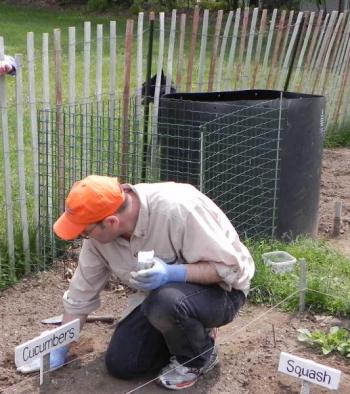
PlantingSaturday we planted cucumber seeds, 2 at a time, in 2-foot intervals along either side of the compost bins. We waited till now because cucumbers don’t like cool soil. They are not as finicky as tomatoes and eggplants, the prima donnas that go in next week, but they are real pansies compared, say, to radishes and peas.

Back 120 years ago, cucumbers were a luxury vegetable, served mostly in high-priced hotels like the Parker House over in Boston. At that time, Arlington was the cucumber capital of the United States. It was home to the country’s most famous slicing cucumber, the Arlington White Spine, a great- great-grandchild of which we have just planted here.

Arlington farmers grew cukes during the winter months and early spring in greenhouses, where they kept the soil and the air warm with a combination of steam boilers and daily infusions of horse manure from carriage operators over in Cambridge.

Off-season, for special events, Arlington cukes fetched as much $1 each from wealthy Bostonians. During the summer months they could still get as much as 40 cents each. (To convert those prices into reasonable estimates in today’s dollars, multiply by 22. That’s the Consumer Price Index multiplier for 1913, the first year for which the index was established.)

Eventually the Arlington White Spine fell out of favor as a retail cucumber, though it still goes strong as a breeder. How it lost its position in grocery stores is a long story, one we’ll tell you later sometime. As a breeder, however, Arlington White Spine  remains the Man ‘o War of slicers, claiming more direct descendents than almost any other rival.
Filed Under: Notes to the Future Tagged With: eggplant, tomato

Kale — emerging forms

May 26, 2010 by Elisabeth

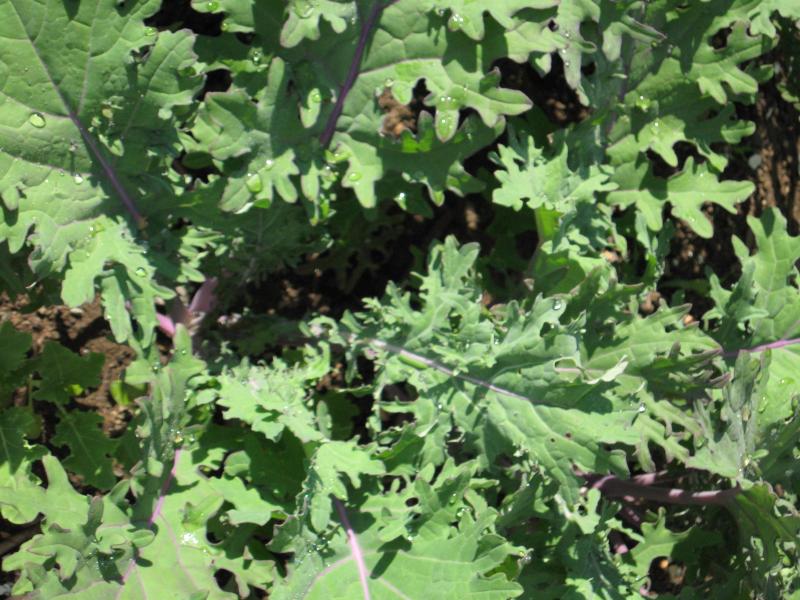
KaleOur homegrown seedlings are one month old as of last Saturday. We planted two types of kale as seed and a third as already grown seedlings from Waltham Fields.
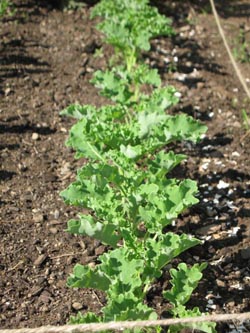
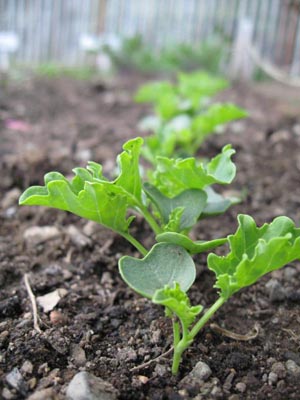
The first packet of seeds filled almost two rows which are growing the more familiar green kale. Whereas at three weeks its small leaves were looking certainly lobed, within another 9 days the distinctive ruffled edges are starting to positively billow.

The second packet of seeds (also from Seeds of Change) yielded two full rows of plants. This, the lacinato, is also known as dinosaur kale. In its fourth week of growth the leaves only hint at its Paleolithic appearance to be.

Curly kale KaleLacinata kale

Red Russion Kale 
 
 
The third type, Red Russian, that went in as small plants had ‘party fronds’ to begin with and is waving them higher every day. I can imagine these leaves would make a fine plume for a turn-of-the-century milliner if they weren’t so perishable and tasty.


Filed Under: Uncategorized

kale — emerging forms

May 26, 2010 by Elisabeth


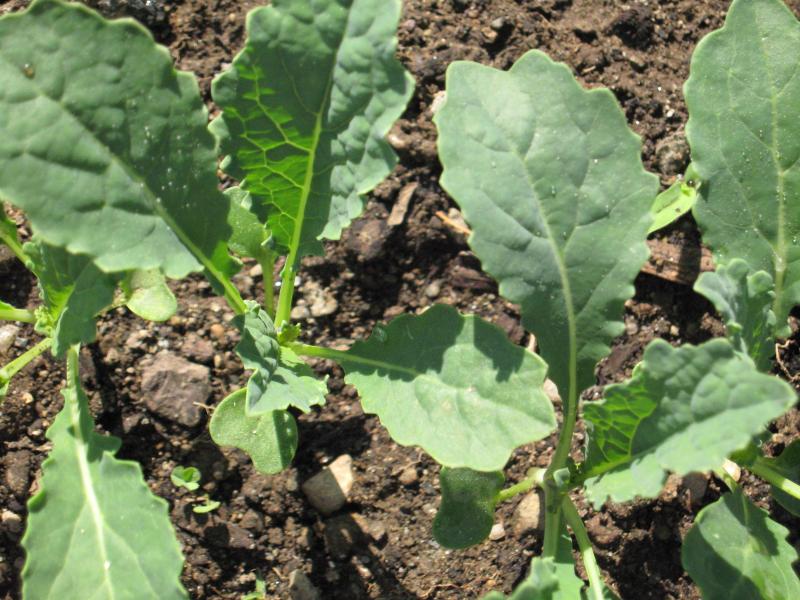
Our homegrown seedlings are one month old as of last Saturday. We planted two types  of kale as seed and a third as already grown seedlings from Waltham Fields. The first packet of seeds filled almost two rows which are growing the more familiar green kale. Whereas at three weeks its small leaves were looking certainly lobed, within another 9 days the distinctive ruffled edges are starting to positively billow. The second packet of seeds (also from Seeds of Change) yielded two full rows of plants. This, the lacinato, is also known as dinosaur kale. In its fourth week of growth the leaves only hint at its Paleolithic appearance to be. The third type, Red Russian, that went in as small plants had ‘party fronds’ to begin with and is waving them higher every day. I can imagine these leaves would make a fine plume for a turn-of-the-century milliner if they weren’t so perishable and tasty.
 

Filed Under: Uncategorized

A Very Productive Day

May 23, 2010 by Elisabeth

 Yesterday there was so much to do in the garden that we split into teams to address different issues.  The peas are getting tall enough that we need to start worrying about a pea trellis.  A park neighbor donated the use of bamboo that is growing in his yard, and a pea trellis was built out of the bamboo stalks.  Some sort of string will be run between the stalks that the peas will climb.

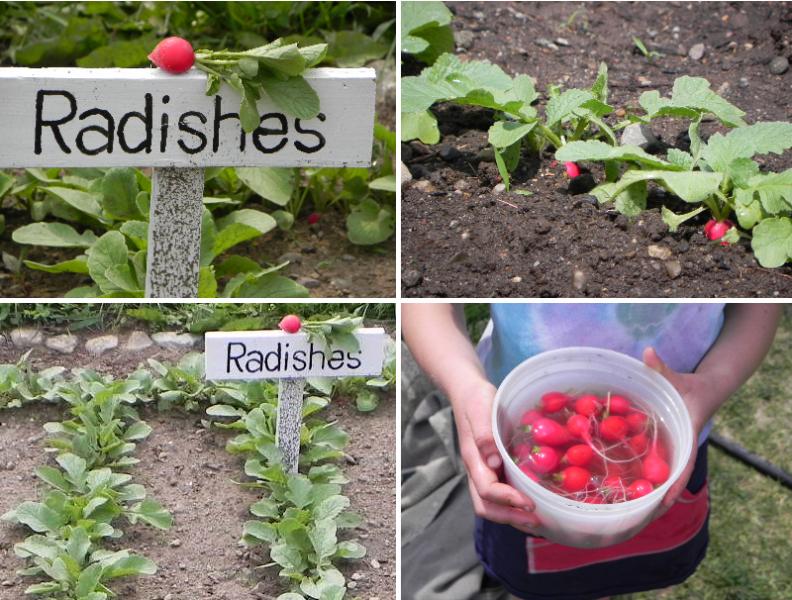
Meanwhile, there were vegetables to harvest!  We planted 2 kinds of radishes, and many of the early radishes were able to be picked.  These radishes are growing in the bed that will be taken over by squash.  By the time the squash is big enough to impact the radishes, the radish season will be over.  More radish seeds were planted in this same bed to provide another crop.

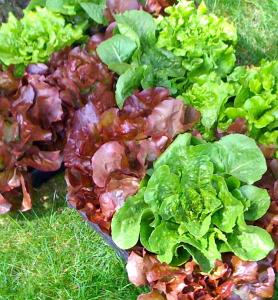
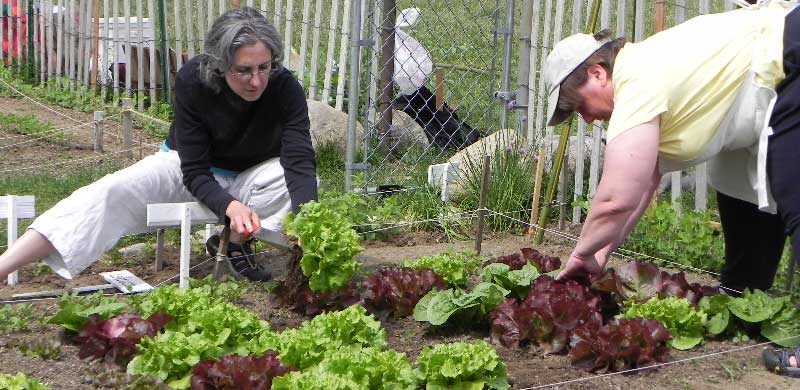
Our first lettuce was planted from seedlings, and many of these seedlings were ready to be picked.  These lettuce heads are amazingly beautiful- green, red, and romaine lettuce.

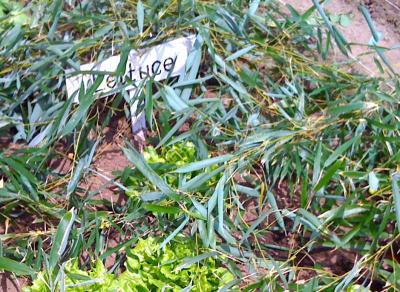
After we picked the largest lettuces, we transplanted some of the lettuce seedlings we had planted from seed.  This is a problematic procedure, as the sun was brightly shining and there was a good chance the seedlings would not survive the stress of being transplanted.  We decided to give it a try, however, as we would just have thinned the transplants.  We came up with a creative way to try to give them some shade by using the leaves from the bamboo stalks that were being used for the pea trellis.

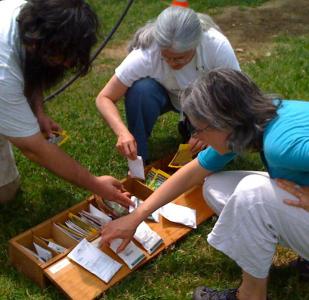
We planted some more lettuce seeds to grow another crop.  The remaining seeds (beans, cucumber, and squash) that needed warmer weather to germinate were planted.  It seemed like we had gotten a bit lax in our watering and it had an impact on the swiss chard and the beets in particular, so everything got a good soaking.  This got a bit overenthusiastic at times, with the hills of the potato patch being watered rather than the valleys where the seed potatoes are actually planted, and the box containing the seeds getting a drenching.  The seeds were able to be rescued, fortunately.

We nibbled on some of our pickings-

Arugula thinnings:

and radishes:

Our chief gardener called a meeting to discuss the looming problem of deciding which of the tomato plants we have bought or have been donated to us we should plant.  We can’t plant them all, and each type of tomato seems to have a constituency.  We reached a compromise, with about half the tomatoes being cherry, grape or smaller than the usual, and the other half being of normal tomato size, with an emphasis on lots of different kinds of tomatoes.

Finally, the professor subjected us to one of his little Veggie School lectures — this time on the history of radishes — and "gently" reminded us about keeping apace with our community commitments homework on this project, which I’m sure we will all take to heart.

All in all, a very good day.

Filed Under: Uncategorized Tagged With: tomato

Harvesting our first lettuce

May 22, 2010 by Elisabeth

Lots of tasty salads tonight!

personal loans nc

Filed Under: Uncategorized

First radishes

May 22, 2010 by Elisabeth

Today we harvested our first radishes. They were planted as seed just 4 weeks ago.
Radishes truly are the hot rods of the vegetable world.

Filed Under: Uncategorized

« Previous Page
Next Page »

Primary Sidebar

2026

  • 2026 Crops List
  • 2026 Garden Plans
  • 2026 Garden Schedule
  • 2026 Watering Schedule
  • 2026 Photos

2025

  • 2025 Crops List
  • 2025 Garden Plans
  • 2025 Garden Schedule
  • 2025 Watering Schedule
  • 2025 Photos
  • 2025 Finances

2024

  • 2024 Crops List
  • 2024 Garden Plans
  • 2024 Garden Schedule
  • 2024 Photos
  • 2024 Finances

2023

  • 2023 Crops List
  • 2023 Garden Plans
  • 2023 Garden Schedule
  • 2023 Photos
  • 2023 Finances

2022

  • 2022 Crops List
  • 2022 Garden Plans
  • 2022 Garden Schedule
  • 2022 Photos
  • 2022 Finances

2021

  • 2021 Crops List
  • 2021 Garden Plans
  • 2021 Garden Schedule
  • 2021 Photos
  • 2021 Finances

2020

  • 2020 Crops List
  • 2020 Garden Plans
  • 2020 Garden Schedule
  • 2020 Finances
  • 2020 Photos

2019

  • 2019 Crops List
  • 2019 Garden Plans
  • 2019 Garden Schedule
  • 2019 Finances
  • 2019 Photos

2018

  • 2018 Crops
  • 2018 Garden Plans
  • 2018 Garden Schedule
  • 2018 Photos
  • 2018 Finances

2017

  • 2017 Crops
  • 2017 Garden Plans
  • 2017 Crop Schedule
  • 2017 Photos
  • 2017 Finances

2016

  • 2016 Crops
  • 2016 Garden Plans
  • 2016 Crop Schedule
  • 2016 Finances
  • 2016 Expenses

2015

  • 2015 Crops
  • 2015 Garden Plans
  • 2015 Crop Schedule
  • 2015 Finances
  • 2015 Expenses

2014

  • 2014 Crops
  • 2014 Garden Plan
  • 2014 Crop Schedule

2013

  • 2013 Crops List
  • 2013 Garden Plan
  • 2013 Crop Schedule
  • 2013 Photos

2012

  • 2012 Crops
  • 2012 Garden Plan
  • 2012 Crop Schedule

2011

  • 2011 Crops
  • 2011 Seeds
  • 2011 Garden Plan
  • 2011 Expenses
  • 2011 Project Proposal
  • 2011 Supporters

2010

  • 2010 Crops
  • 2010 Seeds
  • 2010 Expenses
  • 2010 Supporters
  • 2010 Veggie Adoptions
  • 2010 Pilot Project Report

Recipe Collection

Log In

Members Only

  • Contact information
  • Log Out

Copyright © 2026 · Genesis Child Theme for Robbins Farm Garden on Genesis Framework · WordPress · Log in