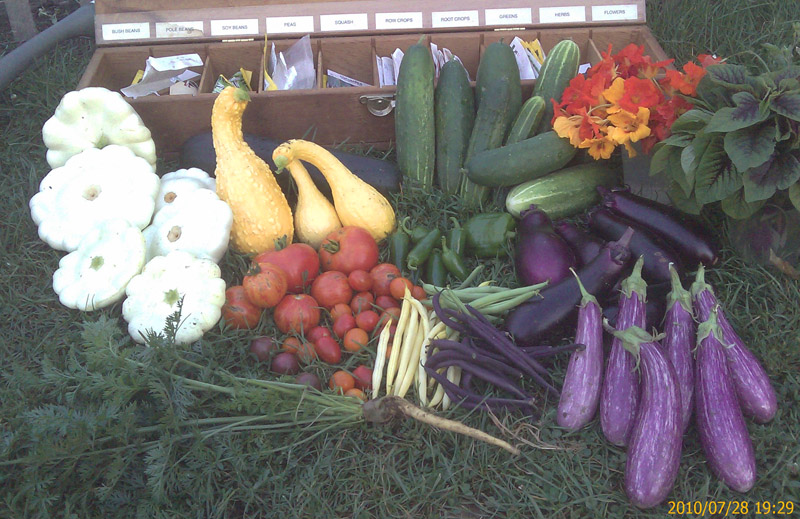
What the heck is that tent for?
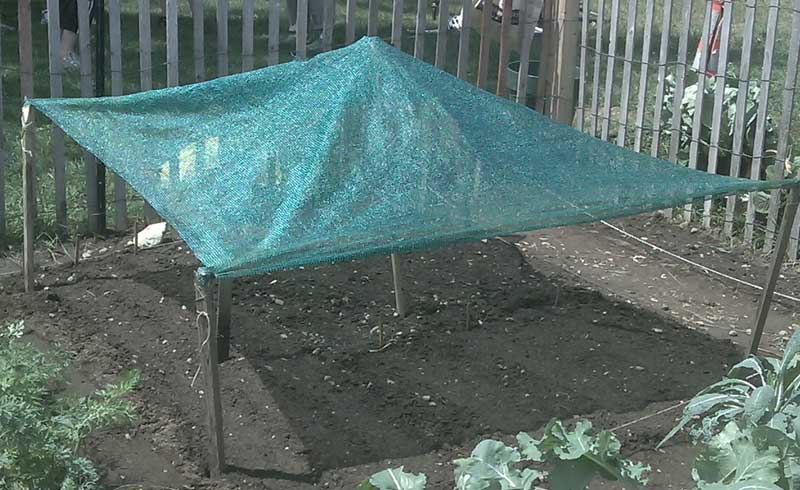
In the hot weather, we shade newly-planted seeds and seedlings from the full sun to help reduce soil evaporation, and keep the top inch or so of soil from drying out and killing the new tender plants. We’ll remove it after the new plants have their first real leaves, and we think the roots have established themselves in deeper soil. This shade cloth lets through about 50% of the sunlight.
A second avantage of protecting seedlings with this type of permeable shade cloth is that it breaks up heavy rain into a mist, which prevents damage to small seedlings and lessens erosion.
Peas, part II – out with the old, in with the new
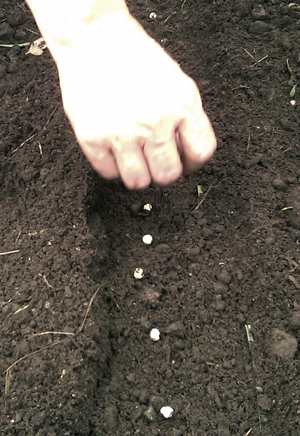
We pulled the last of the snow and shell peas today, and replanted new snow and shell peas for a fall crop – same varieties: Oregon Sugar Pod snow peas, and Pioneer shell peas.
The spring crop was ready for first harvest after about 70 days. So everything else equal, we could expect a new crop around the beginning of October. However, the spring crop starts with short, cool days and ends with long, hot days. The fall crop sees just the opposite. We need to keep them well-watered in the hot months so they don’t just croak.
Flowers of the Sun
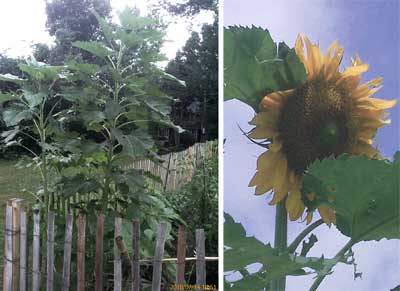
The sunflowers started blooming this week, about 92 days after planting. The variety is Russian Mammoth. They are tall, and beloved by bees.
Cabbage Splits!
So maybe we waited a -little- too long. All three cabbage were pulled today, and the green one was beginning to split. Some claim that such splitting indicates over-watering, or perhaps watering more than usual (extra rains). However, I think cabbages just do that when they’ve decided they’re big enough. Perhaps both are true; quoting one web source: "Splitting is caused by the pressure of excessive water taken up after the heads are solid." One of the red cabbages looked a bit bigger than last week, but the other did not. It was time to harvest.
A Squash Mystery
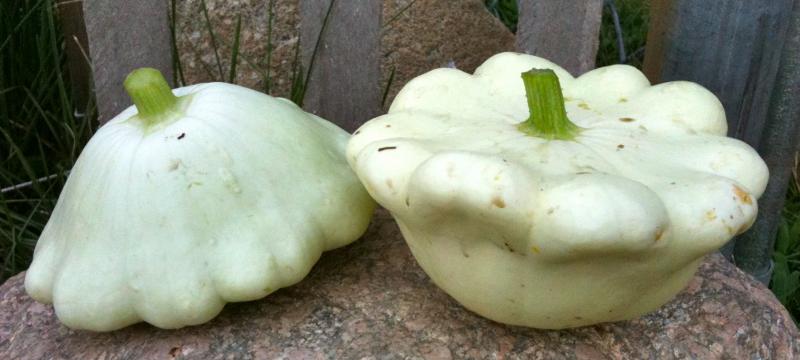
We harvested several pattypan squash on Wednesday and Alan noticed that some of the squashes appeared to be growing upside down. It seems like these 2 different squashes were grown on 2 different plants.
Very strange.