
Carrots: Lessons Learned This Year
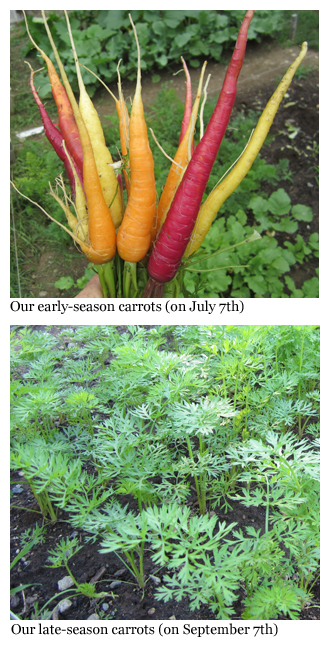 This year’s early-season carrots struggled through an infestation of Asiatic Garden Beetles, a nocturnal garden pest that needed to be painstakingly removed from the soil during thinning and weeding. The early crop took a bit longer than expected to mature, but the beetle-busting efforts paid off with truly lovely carrots.
When our late-season carrots got off to a rocky start, we began to worry. We seeded an area vacated by fava beans on July 7th. Germination was good, the seedlings began growing, but then they all died. All except a few that had been in the shade of the mature carrots at the ends of the rows. We’re not certain, but it may be that the seedlings became too dry at a critical period and quickly withered in the mid-July sun. They were replanted and the second carrot crop now appears to be on its way to greatness. But for my part, I’d like to document a few carrot lessons we’ve learned this year.
1. Favor varieties with short growing seasons. Two crops divides the season into mid-April to mid-July and mid-July to mid-October, giving a generous 91 days for maturity. Yet, carrots grown in the peripheries of the season take longer than the predicted 75 days.
2. Plant the rows close together. The carrots shared a bed with salad turnips this year, dividing one 6′ x 9′ planting bed into two beds 3′ wide. We planted five rows 6 inches apart and the spacing was excellent.
3. Sow plenty of seed. Carrots take their time germinating (1-3 weeks), so they don’t allow much opportunity to infill seed bare spots without paying a heavy price in lost time.
4. Keep the newly-seeded soil moist. We used shade cloth after re-seeding in July and left it in place until the seedlings had a good roothold (at about 2" tall). This may be less of a problem for the early crop.
5. Lightly thin the seedlings each week. Successive thinning doesn’t take long, and it results in the best seedlings surviving to maturity at the ideal spacing of around 1 inch apart.
Jewels from the Three Sisters
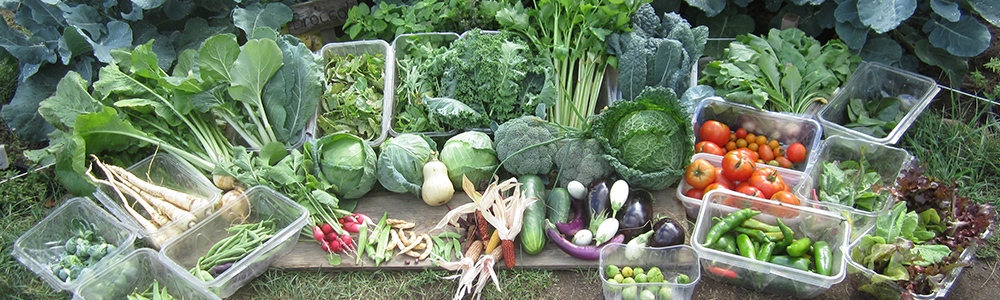
Today our bounty included corn from our Three Sisters plot (beans and squash make up the trio). The corn is a popping variety–popping ability still to be tested, but fall beauty not in question.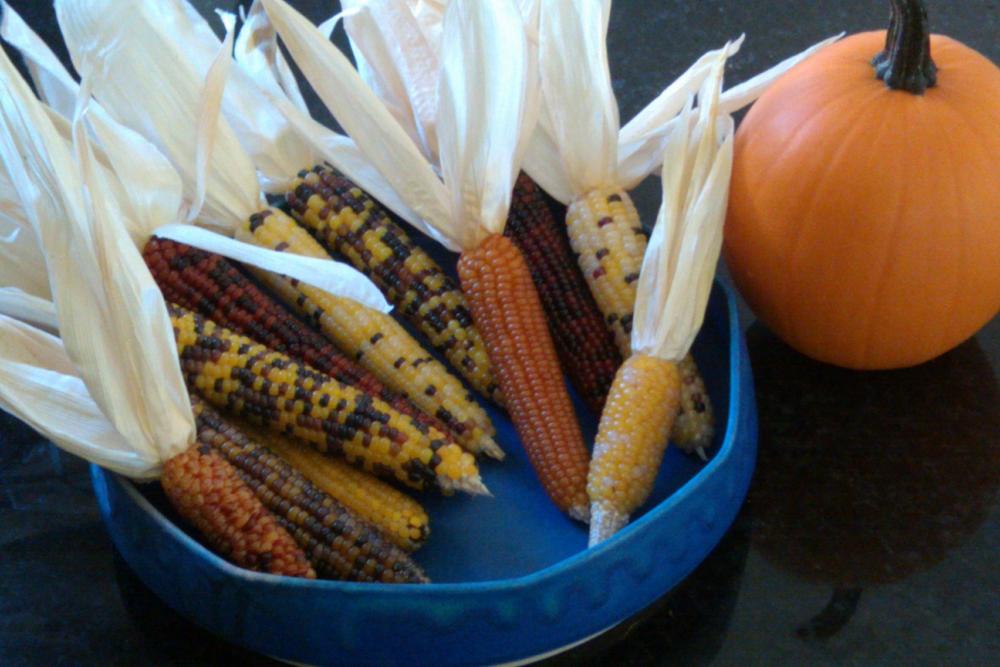
Another Beneficial Insect Spotted at Robbins Farm Garden!
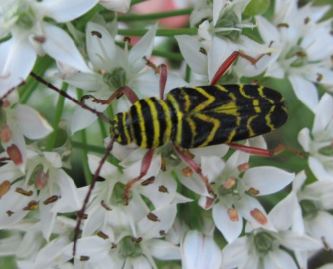 On Saturday, September 8, 2012, I spotted this unusual insect gathering nectar from our garlic chive blossoms. At first glance I thought it was some kind of wasp, but upon closer inspection, I decided that it was some kind of beetle. (This type of visual imitation, by the way, is called biomimicry. In this specific case, this beetle evolved to resemble a wasp as a deterrent to possible predators.) After some online research, I discovered that what we had here is a Megacyllene robiniae –aka a Locust Borer Beetle. [Photo credit – Alan Jones].
This convincingly camouflaged beetle shouldn’t be a problem in our garden, as this native insect only lays its eggs on, and then subsequently damages, black locust trees. It was on the chive blossoms simply to feed, and, coincidentally, to pollinate. So, as far as we are concerned, this is another beneficial insect helping to tend our garden!
For more info on this insect, see http://www.cirrusimage.com/beetles_locust_borer.htm
This Day in the Garden – September 8, 2012
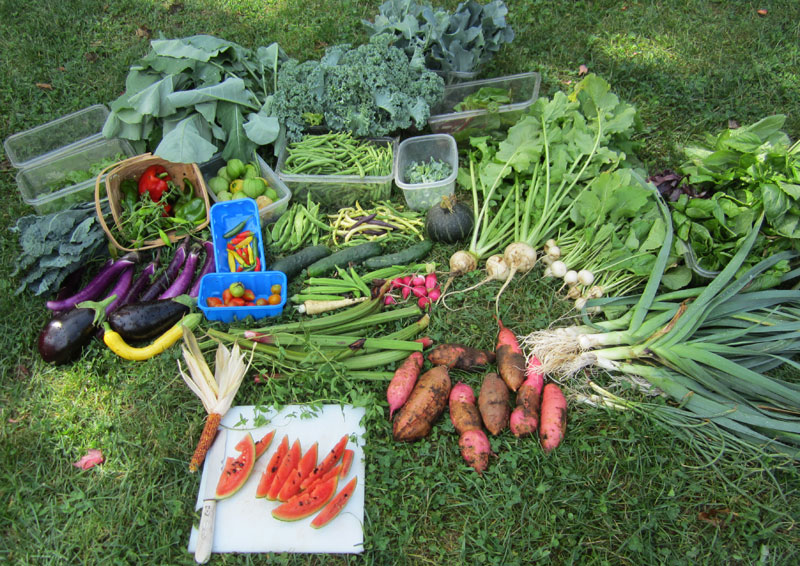
Our first harvest of sweet potatoes, leeks and rhubarb, and the last of the watermelons. None of the watermelons this year have made it out of the park – it’s just too much fun to share them on the spot. Those eight big sweet potatoes were from just one plant! We’ll wait a few weeks to dig the rest, after the plants start dieing back.
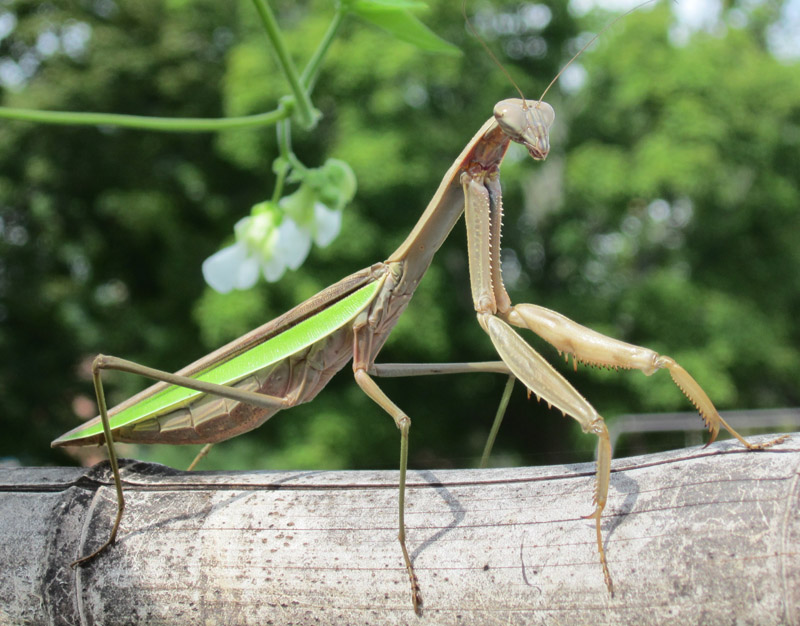
Michael spotted a special visitor on the pole beans: Our mantid friend is a Tenodera aridifolis sinensis, aka a Chinese Praying Mantis.
See http://speciesofjabin.blogspot.com/2010/08/savanna-chinese-praying-mantis.html
A praying mantis is a voracious predator, (i.e., a "beneficial" insect), and its favorite munchies are insect & bug pests that we don’t want in our gardens! Isn’t it nice to know that Mother Nature is helping us out? (And kudos to Alan for the excellent click!)
Mildew Strikes Back!
This past Saturday, the mildew had spread across the patch of summer squash. While *we* had been careful to avoid watering late evening, to avoid water sitting on leaves not drying off, Mother Nature had no such qualms. For a week she rained on and off as she pleased, day and night, throwing in a few thundershowers for good measure. Plus with the high humidity, and therefore a high dewpoint, we surely had leaves soaked in dew every night.
Nevertheless, we benefited significantly from using potassium bicarbonate (couple teaspoons mixed in a few quarts of water — we didn’t add soybean oil because that gummed up the sprayer) to prevent mildew. Indeed, the cucumber leaves were still free of mildew, and we’ve had a much more abundant crop of cucumbers this year than last. The winter squash along the fence showed some mildew encroachment, which by today according to our Thursday waterer had spread entirely over that patch. Interestingly, the winter squash under the beans and corn was still free of mildew. Perhaps yet another advantage of growing the Three Sisters together!