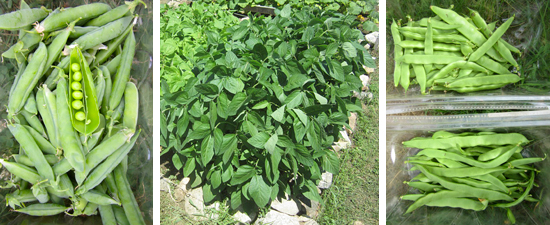
Beans (bush): yellow and striped varieties good – try new green variety
Beans (pole): timing good, Garden of Eden Romano did well, Northeaster Romano produced faster, but had a short season & stringy beans, Kentucky Wonder and Trionfo Violetto not very productive – try new green variety?
Fava beans: germination and spacing good, bad timing with aphids and flowers, be vigilant next year
Peas (spring): all early varieties did well (Sugar Snap had second wind)
Peas (fall): variety excellent, produced well and late into season – use shade cloth for summer planting to keep seed cool & provide support
Soybeans: did well
2016 Nightshades (end of season notes)

Eggplants: early critter predation (due to drought), staking important, Italian variety excellent, Orient Express quicker to harvest and larger plants, but less cold hardy than Ping Tung Long
Peppers: too many hot types (more sweet types, lose Anaheim & Jalapeno?, try Padron?, bigger Thai variety?)
Tomatillos: not as productive as usual, possibly due to following (alleopathic) Jerusalem artichokes, no beetle damage
Tomatoes: seedlings planted too far from stakes (try 4-5”), Garden Gem did poorly, Juliette did very well, Green Giant was strange
2016 Root Crops (end of season notes)
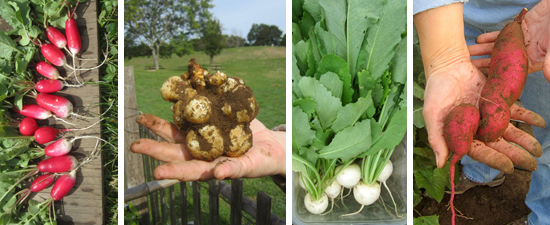
Beets: damage by leaf minor – use row cover next year, try starting some indoors
Jerusalem Artichokes: did great in new location, less mildew & aphids – reduce space next year?
Potatoes: decent harvest on all types, no loss of plants, some scab on purple variety (look into causes)
Radishes: both varieties (early and late crops) did well
Sweet Potatoes: all slips did well (from our tubers), simple planting in rows also worked – very good, do again
Turnips (cooking): did well, but some seed dried out – try covering seed with shade cloth?
Turnips (salad): spring & fall crops did well – plant more carefully & thin better next year
2016 Squash family (end of season notes)
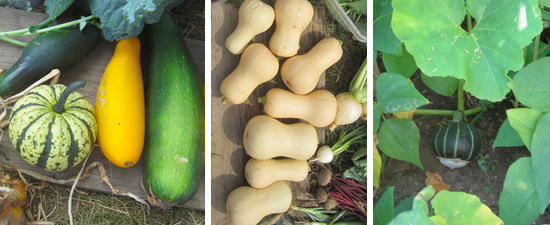
General: grow winter squashes in rows next year; groups of 3 harder to check for borers, try interspersing with other crops in perimeter beds to reduce spread of diseases
Butternut squash: our most productive variety, did well relative to other squashes
Cucumbers: both types better w/mildew, but hit hard with bacterial wilt, volunteer plant in pepper bed held out the longest – try 2 plantings & early varieties?
Delicata squash: tasty variety, but only 1 squash per plant
Pumpkins: bad borer (borers hid inside stems) and mildew damage, best variety so far (bush type, grow on ground)
Watermelons: good year, volunteer plant also produced
Yellow Summer squash: less robust than zucchini, destroyed by borers early – try second planting? Try cousa type?
Proposal for fence & accessibility improvements
In the fall of 2015, we prepared a proposal to replace the fence and improve the accessibility of the garden. The proposal was developed with guidance from the Town's ADA Self-Evaluation Report on Arlington's public parks and open spaces (prepared by the Institute for Human Centered Design for Arlington's Recreation Department and Park and Recreation Commission).
Our proposal was presented to the Park and Recreation Commission and the Friends of Robbins Farm Park Board in October 2015. The proposal was subsequently included as part of the Robbins Farm Park Field and ADA Renovation Project in the Community Preservation Committee's 2016 Funding Application, approved at the 2016 Town Meeting.
Engineering consultants hired by the Town for the Park Renovation Project are currently developing plans through a series of public meetings. It's our understanding that our garden proposal will be the subject of a separate review of as part of this public process. We hope to begin the work in 2017.
Our Proposal submitted in October 2015 (pdf)
Options submitted with proposal (pdf)
Brussels Sprouts Varieties
We planted two varieties of brussels sprouts this season: Churchill left-over from last season and a new variety Octia which we selected, in part based on a review of brussels sprouts from UNH cooperative extension. As recommended by that review, we topped both varieties to encourage a higher yield.
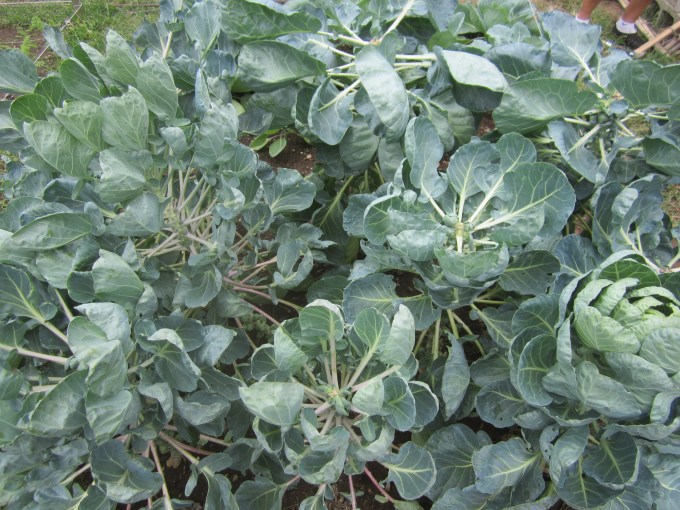
The mature plants were relatively easy to distinguish because Churchill has a redish tint to the stalks and leaf stems (lower left) while the Octia were pale green (upper right).
Another difference was the time to maturity. A few Octia sprouts were large enough to start harvesting in mid-September, while the Churchill sprouts were still very small. Now, in mid-October, both varieties have some harvestable sprouts, but the Octia has a much larger quantity of mature sprouts ranging from medium sized to very large. Churchill sprouts are small to medium. The picture below contrasts the number of Octia (left) versus Churchill (right) sprouts harvested on October 7th. Octia produced 4-5 times more sprouts than Churchill and some of them were very large.

One issue that we noticed with Octia at the start of the harvest was that the outer leaves of some sprouts were damaged (dead or possibly mildew?) and stunted growth. It was a small portion of the sprouts, but those affected by the damage were still edible after removing the outer leaves.
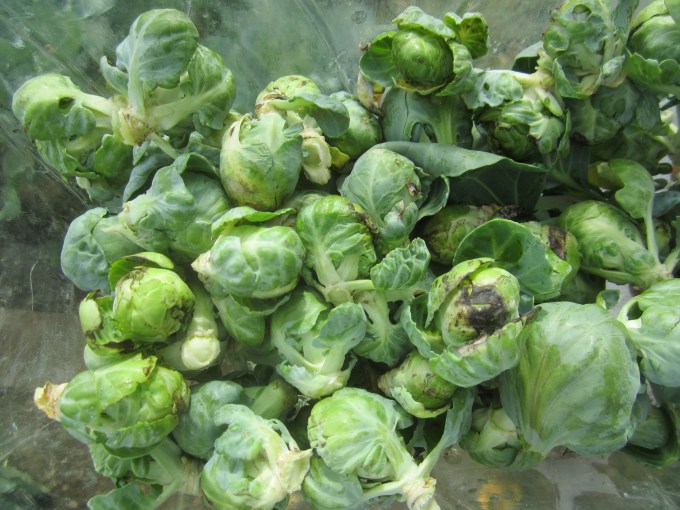
Some of the Churchill sprouts also had an odd elongated pine-cone shape to them instead of a more compact cabbage shape, but they still taste fine and mature to a medium size.
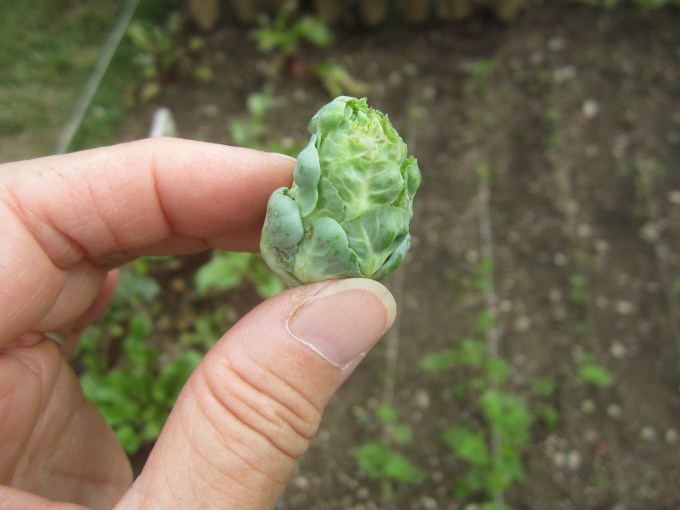
Overall, the Octia seems to be a good variety and is much more productive than Churchill; however, a portion of the sprouts were damaged and remained small. Another consideration for future brussels sprouts varieties in the garden is that the Churchill variety was not offered by Burpee or Johnny's Seeds for the 2016 season, so it is not clear whether Churchill will be available for next season.
On another note, we have been very fortunate to have very few aphids on either variety of brussels sprouts this year! Aphids were one of the major challenges we faced with the brussels sprouts in the past two years.