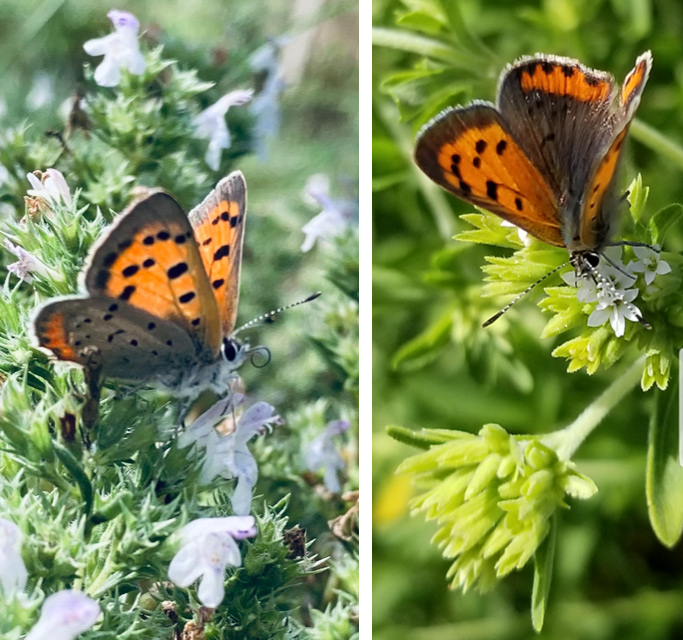
Nicole (left) and Mike (right) captured these stunning photos of an American Copper Butterfly who visited the garden today on the winter savory and the stevia plants in the herb border. This beauty is quite small, only about an inch wide.
A Cooperative Learning Project
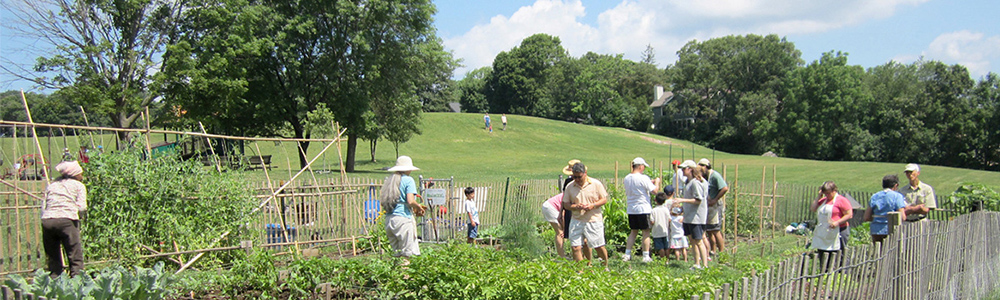
Nicole (left) and Mike (right) captured these stunning photos of an American Copper Butterfly who visited the garden today on the winter savory and the stevia plants in the herb border. This beauty is quite small, only about an inch wide.
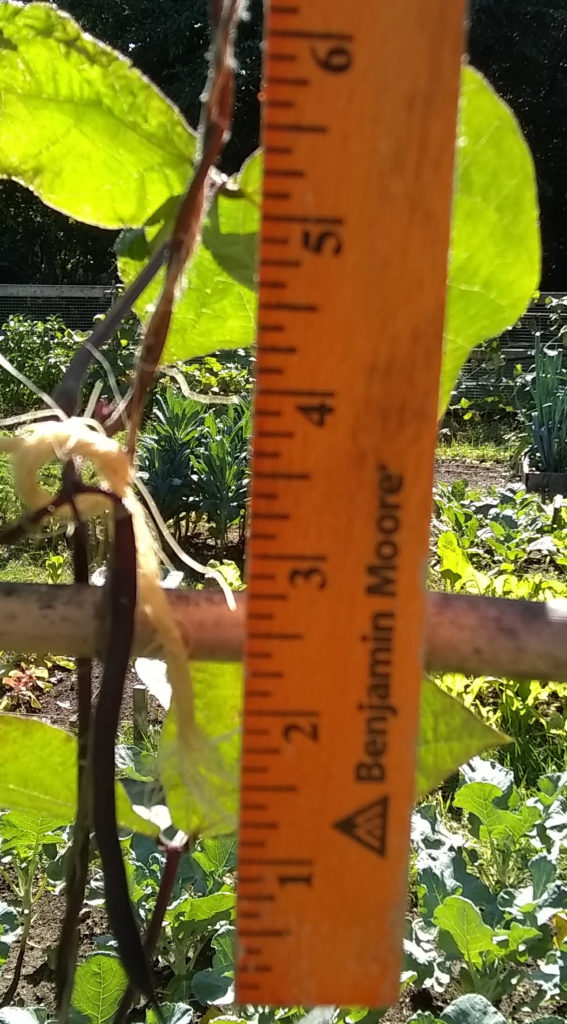
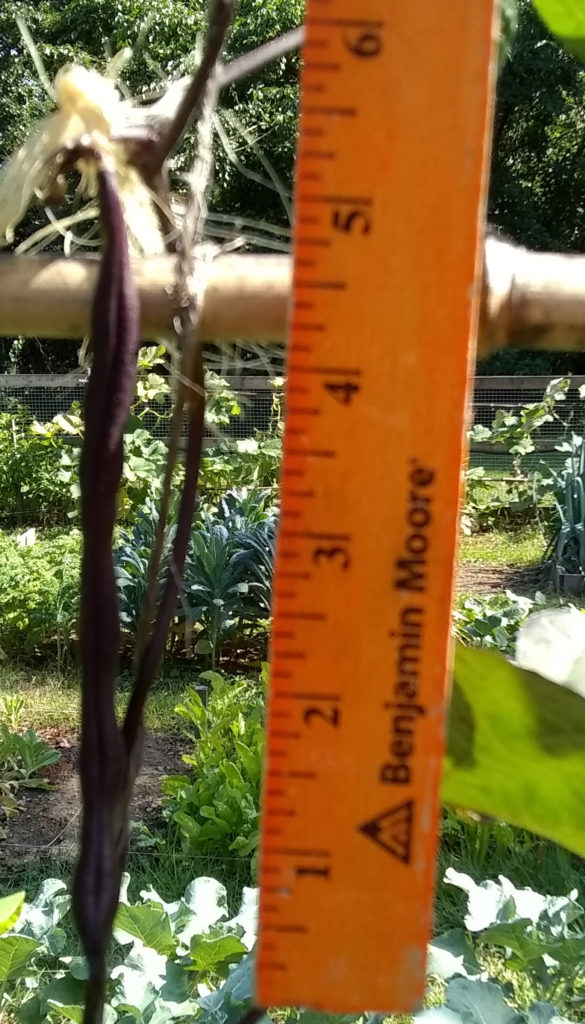
A: About 2″ or 40% in 72 hours. (Trionfo Violetto)
Tropical storm Fred hit New England on Thursday, causing flash floods all over the area. Our garden suffers from runoff coming down the hill, which moved loads of bark mulch from the playground and crushed stone from the path into the garden, leaving a serious rut outside the gate.


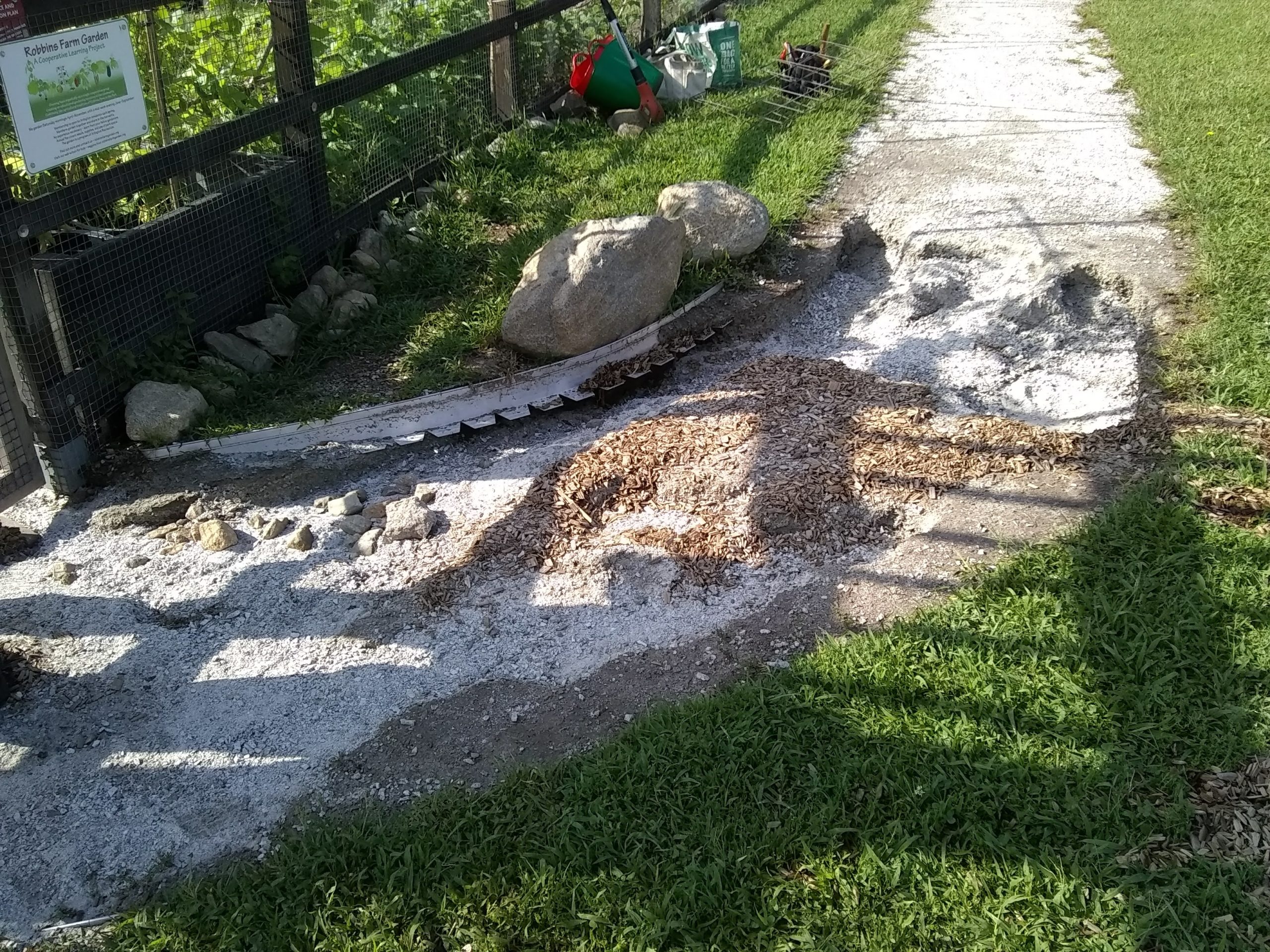

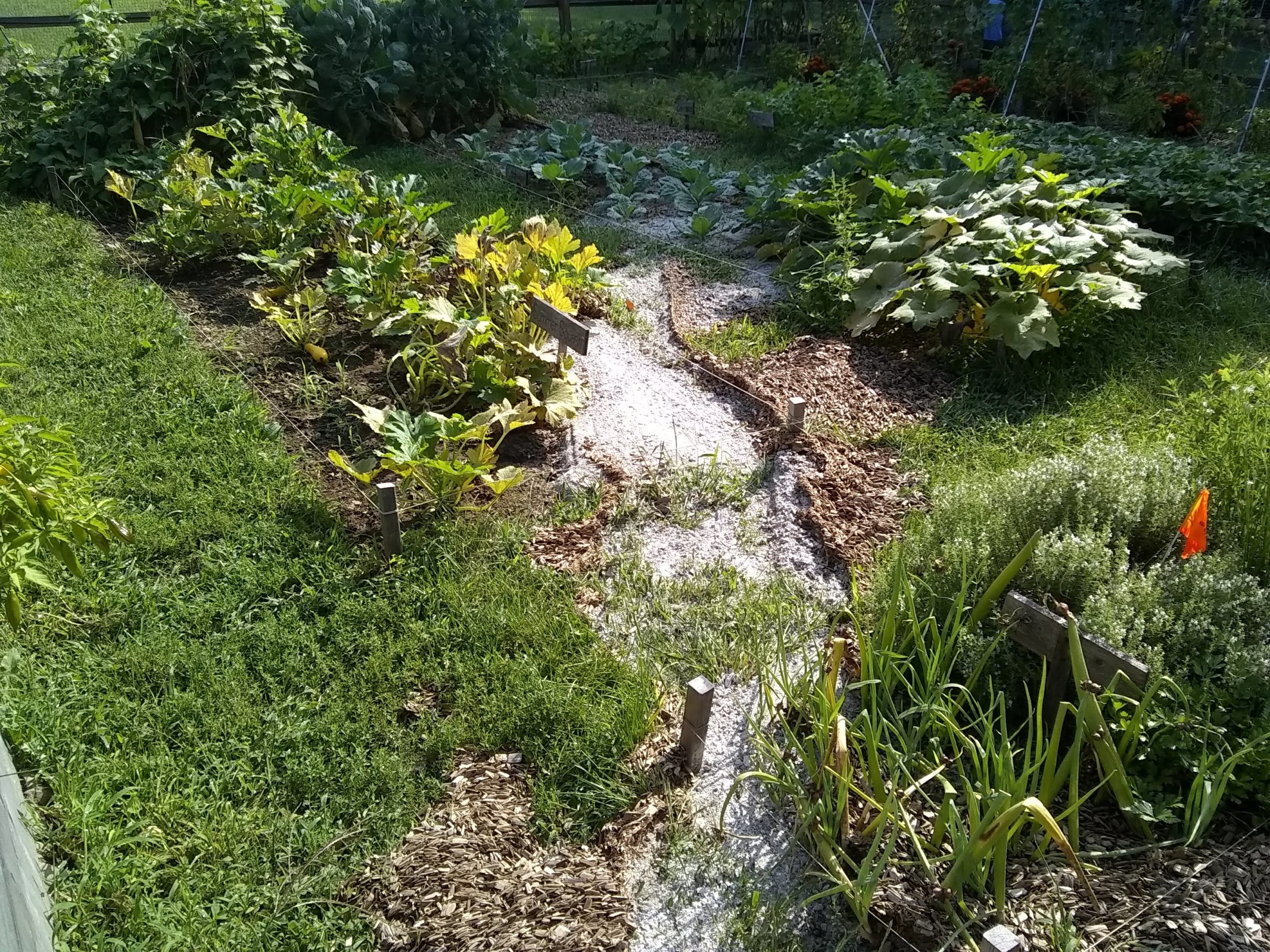


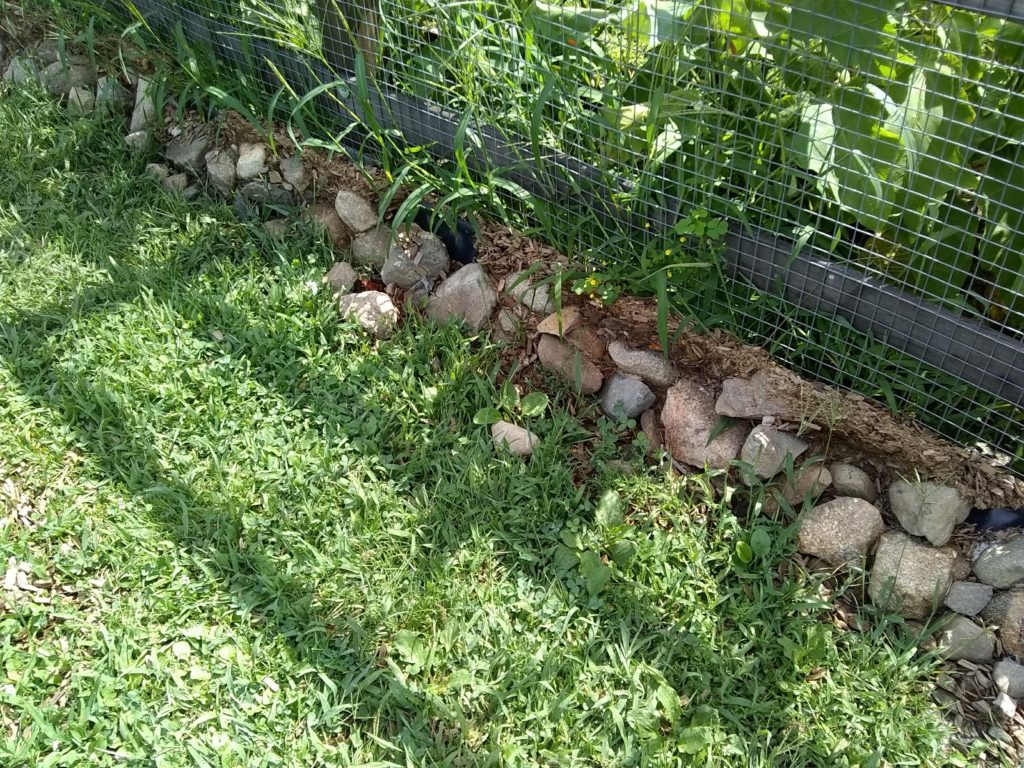
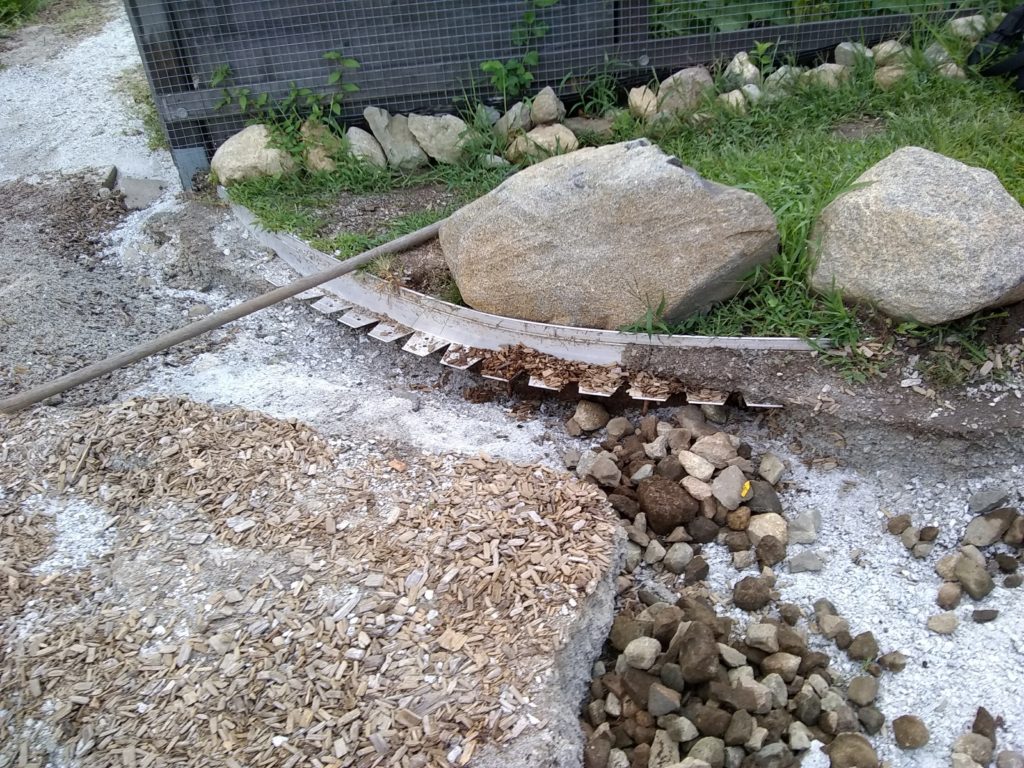
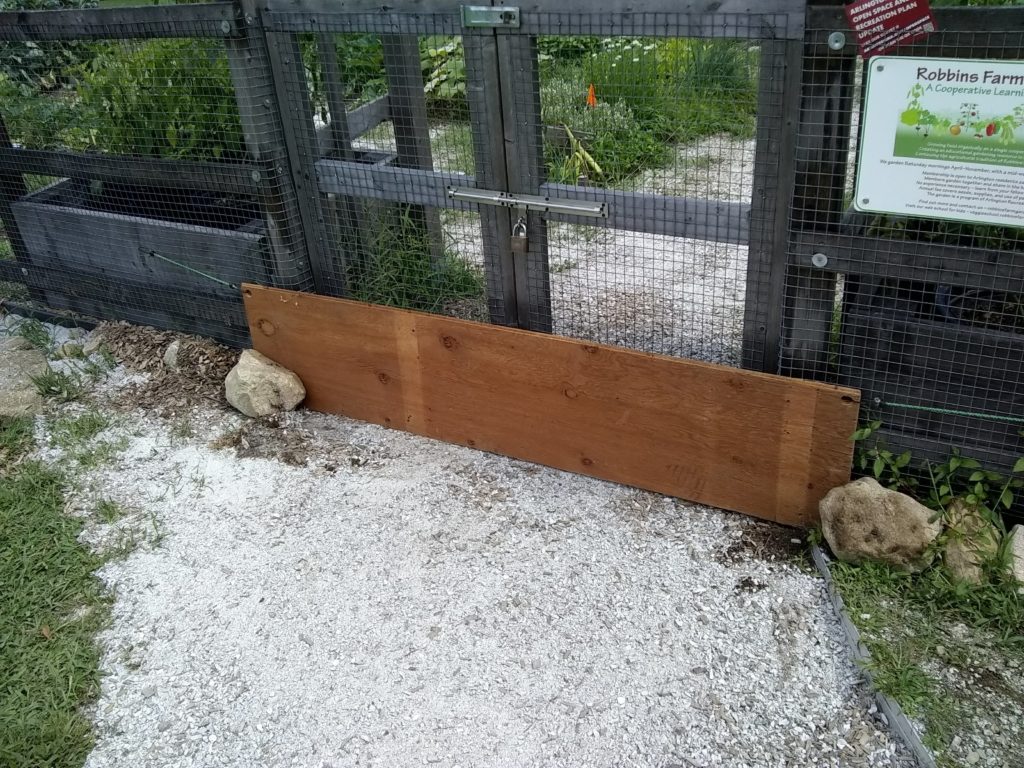
Knowing that Hurricane Henri is due to hit the region tomorrow, we are attempting to reduce the damage by filling the gully in the path with rocks, and placing a temporary barrier across the gate. The slurry of water and debris has to go somewhere, but we’re hoping to divert it away from the garden beds, or at least slow it down and spread it out to reduce the damage.
A: About one inch per day.
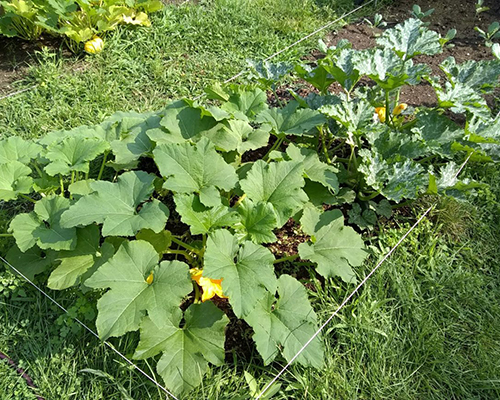
We’ve had success growing successive crops at the garden, most with very little trial and error. Yet, this was our first successful year with a second planting of zucchini and yellow squash. Now that we’ve done it, let’s document it.
We seeded our first crop indoors on May 16, planted the seedlings in the garden on May 31, and harvested 48 days after seeding on July 3. (That’s our normal schedule.) The second crop was seeded indoors on June 13, planted in the garden on July 5, and harvested 55 days after seeding on August 7.
Four weeks between seeding the crops seems right, and using a super-size 6-pack for the second crop was also helpful because the space for the seedlings wasn’t open for 3 weeks. It’s important to note that giving the seedlings their own space in the garden (rather than tucking them between the older plants) also made a big difference.
For the record:
In 2019, the second crop was seeded on June 22, planted on July 13 and did not produce a harvest, primarily because the seedlings were crowded and shaded.
In 2017, the second crop was seeded on July 9, planted on August 19 and did not produce a harvest, primarily because it was seeded too late.
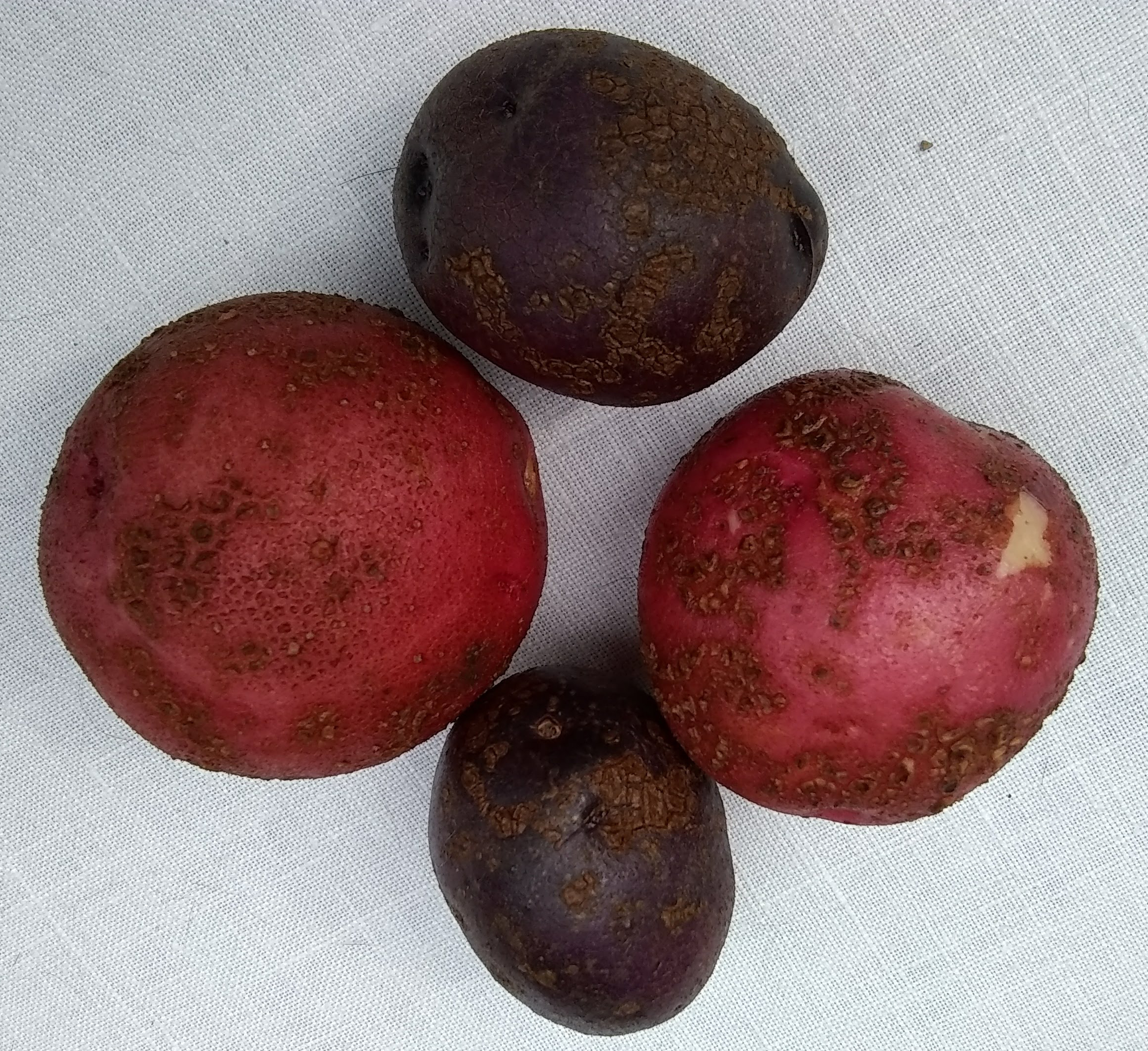
Our potatoes this year aren’t as perfect as they could be due to scab disease, all the little brown bumps on the skins. Potato scab is caused by a common bacteria found in soil There are plenty of good references discussing scab, its causes and prevention, like Vegetable: Potato, Scab | UMass Center for Agriculture, Food and the Environment and Potato Scab (cornell.edu). Scabby potatoes are edible, but the scabby parts should be peeled, which reduces the nutritional value.
A summary of how we can reduce the risk of scab on our spuds: