• Skip to primary navigation
  • Skip to main content
  • Skip to primary sidebar
  • Skip to secondary sidebar

Robbins Farm Garden

A Cooperative Learning Project

  • About the Garden
  • Membership & Rules
  • Veggie School
  • Local History
  • Contact Us
  • 2022 Crops List
  • 2022 Garden Plans
  • 2022 Garden Schedule
  • 2022 Photos
  • 2022 Finances

Elisabeth

Cabbage vs. Cutworms

May 10, 2010 by Elisabeth

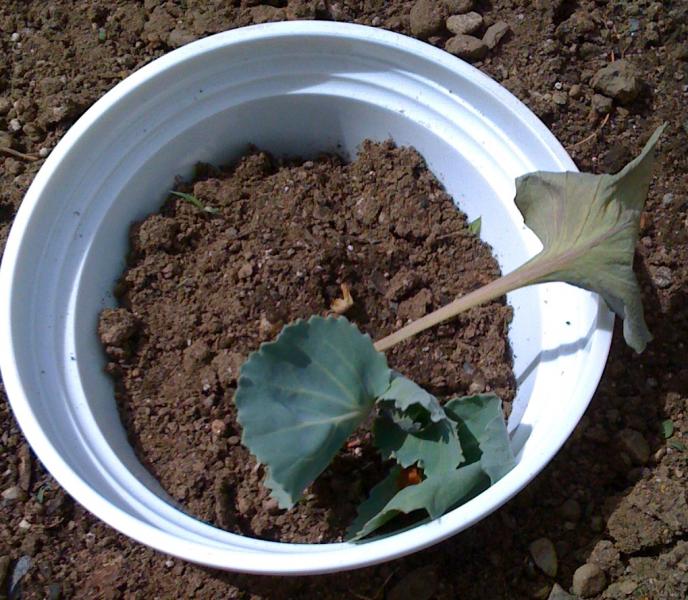
So last Saturday I brought some plastic noodle soup bowls to be used for cutworm collars, intending to cut out the the bottoms to create plastic collars.  However, I was advised that cutworms collars are needed when the seedlings are fragile, so I didn’t install them.  Later, it occurred to me that since this is an educational garden, I should install them anyways (as a conversation piece).  It turns out I didn’t have enough soup bowls, so we installed them on some of the cabbage, broccoli, and cauliflower plants, particularly the more struggling ones.  As a plus, it was pointed out that the collars help to water those particular plants by cupping the water.

I also did a websearch, and found this nice article on cutworms.  As far as our gardening is concerned, I think these are the basics on cutworms.  They are spring pests, eating the stem of seedlings only at its base.  Since that "cuts" the seedling down (hence the name), the plant is destroyed, and since that’s all they eat before going to the next, they can wreak considerable damage to a garden.  Because they dwell close to the surface, collars only need to be pushed a few cm into the soil to stop them.  I was surprised to learn that one can even use cardboard collars.  They will be a threat to us through May and possibly early June.  And the sunflowers we’ve planted in the corners will be a magnet (which we should check periodically to find new cutworms).
loans for adverse credit

Filed Under: Uncategorized Tagged With: cabbage

Collard Greens’ Sprouts – On Schedule

May 7, 2010 by Elisabeth

The collard greens’ tiny sprouts have broken through, on schedule, as have those of both their neighbors, the Swiss chard and the kale.  The Swiss chard’s two seed leaves are elongated, like little green bananas. The two seed leaves for the collard greens and kale, their close cousin, are quite circular, more like Mickey Mouse’s ears.

There are lots of those tiny shoots poking their heads up out of the soil. They look adorable. And the kids who walk past the Garden on the way to school seem to take delight in them. 

We’ll start thinning these seedlings pretty soon. We don’t want them crowding each other. So the Reaper comes soon. We’ll thin them out, saving only the most promising, leaving the survivors spaced maybe just an inch from one another. That’s just the first thinning. There will be more. As soon as leaves come close to touching, out comes the weaker-looking of the two.

If I understand this right, at some point we’ll end up with collards standing as much as 2 feet from one another.

Filed Under: Uncategorized

How I learned to love lettuce

May 2, 2010 by Elisabeth

A head of lettuceI grew up thinking I hated lettuce. Every night my sister and I argued over who had to make the salad- tomatoes that tasted like cardboard, cucumbers (which I still don’t particularly like), and iceberg lettuce. I ate it, but I never particularly enjoyed it. Once I got out on my own, I discovered that there was lettuce that was not iceberg, which made salad much more interesting. I still was not a big fan, however. It took a vacation to Hawaii to turn me around. We were visiting friends of ours who lived near Honolulu, and we went to the farmers’ market that is right behind Diamond Head. Our friend bought a big bag of arugula, and we went home and made a salad. Just arugula and some oil and vinegar. Wow- I had never tasted anything like it. It turns out that the world of lettuce and greens beyond iceberg is large and varied, and I can now happily eat salad just for the greens, without adding much of anything to cover up the boring lettuce base. I’m still partial to arugula, but there is all kinds of lettuce that is mighty tasty .
 

Filed Under: Uncategorized Tagged With: tomato

Cabbage – First Impressions

May 1, 2010 by Elisabeth

I missed planting day, which was last Wednesday.  The seedlings look strong (the first few days are critical to seedlings — either they take, or they don’t, in which case they wilt obviously).  At first I didn’t even know they had been planted, as there was a single sign for that bed saying "Cauliflower".  I did think it was a lot of cauliflower, but was later informed that the bed contained broccoli and my adopted cabbage as well.  They sure look alike!  Although one person pointed out, the seedlings with red stems were probably the red cabbage.  I was a bit concerned that we didn’t have cutworm collars, which we from the AFC garden used in the past with cabbage, but I had an idea of something I might bring next week to use for cutworm collars.

Filed Under: Uncategorized Tagged With: cabbage

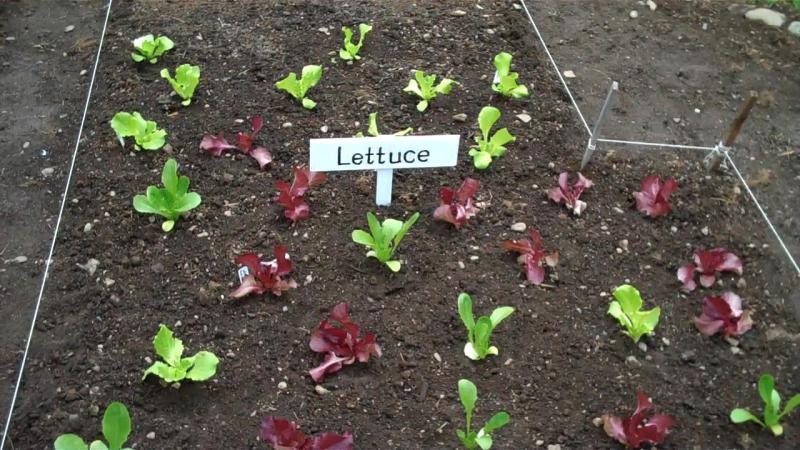
Lettuce

April 29, 2010 by Elisabeth

Lettuce porn


Filed Under: Uncategorized

Planting Collard Greens

April 26, 2010 by Elisabeth

Let’s start with the soil prep. We started preparing the soil last Saturday, the 17th. That was when Mike and Alan dug up the plot with with a motorized rotary tiller. Then yesterday, to loosen it up still further down —  to about 10 inches or so — we went at it with our garden forks. Since collards produce tap roots as long 15 to 18 inches, we hope this first 10 inches of fluffed-up soil gives them a good start.

The results from the Ag Center at U Mass Amherst told us the soil was pretty anemic and too acidic. To fortify and sweeten it, we mixed into it a good deal of compost, some dried-out chicken poop and cow manure, plus what seemed like a ton of pelletized lime.

Now the planting. For the collard greens, we planted three rows of seeds. They’re in the center of a 6 x 9 foot section that plays host on one side to Swiss chard and on the other to two varieties of kale, the collards’ closest cousin.

Seeds for collard greens are tiny. We spread them fairly densely along their three rows, with the idea of thinning the less successful seedlings out later.

Then we covered the seeds with about 1/2 inch of dirt and watered each row with a sprinkling can, so as not to disadvantage any of our promising young contenders.

Seeds for collard greens are said to germinate fairly quickly. So we expect to see their sprouts some time next week or the beginning of the week after that.

This type of collards — Georgia, from Burpee — is supposed to reach full maturity in about 75 days. That means the first or second week in July.  We’ll start harvesting leaves, though, probably a good month before that.

Speaking for myself, I love collard greens, though I’ve never grown them, never cooked them.  We’ve always gotten our collards, Saturday afternoons, at the basement kitchen of the United House of Prayer for All People, on Seaver Street in Dorchester. Great soul food there.

I look forward to trying my own hand at fixing collards. But I doubt they’ll be nearly as good.

Filed Under: Uncategorized

« Previous Page
Next Page »

Primary Sidebar

2026

  • 2026 Crops List
  • 2026 Garden Plans
  • 2026 Garden Schedule
  • 2026 Watering Schedule
  • 2026 Photos

2025

  • 2025 Crops List
  • 2025 Garden Plans
  • 2025 Garden Schedule
  • 2025 Watering Schedule
  • 2025 Photos
  • 2025 Finances

2024

  • 2024 Crops List
  • 2024 Garden Plans
  • 2024 Garden Schedule
  • 2024 Photos
  • 2024 Finances

2023

  • 2023 Crops List
  • 2023 Garden Plans
  • 2023 Garden Schedule
  • 2023 Photos
  • 2023 Finances

2022

  • 2022 Crops List
  • 2022 Garden Plans
  • 2022 Garden Schedule
  • 2022 Photos
  • 2022 Finances

2021

  • 2021 Crops List
  • 2021 Garden Plans
  • 2021 Garden Schedule
  • 2021 Photos
  • 2021 Finances

2020

  • 2020 Crops List
  • 2020 Garden Plans
  • 2020 Garden Schedule
  • 2020 Finances
  • 2020 Photos

2019

  • 2019 Crops List
  • 2019 Garden Plans
  • 2019 Garden Schedule
  • 2019 Finances
  • 2019 Photos

2018

  • 2018 Crops
  • 2018 Garden Plans
  • 2018 Garden Schedule
  • 2018 Photos
  • 2018 Finances

2017

  • 2017 Crops
  • 2017 Garden Plans
  • 2017 Crop Schedule
  • 2017 Photos
  • 2017 Finances

2016

  • 2016 Crops
  • 2016 Garden Plans
  • 2016 Crop Schedule
  • 2016 Finances
  • 2016 Expenses

2015

  • 2015 Crops
  • 2015 Garden Plans
  • 2015 Crop Schedule
  • 2015 Finances
  • 2015 Expenses

2014

  • 2014 Crops
  • 2014 Garden Plan
  • 2014 Crop Schedule

2013

  • 2013 Crops List
  • 2013 Garden Plan
  • 2013 Crop Schedule
  • 2013 Photos

2012

  • 2012 Crops
  • 2012 Garden Plan
  • 2012 Crop Schedule

2011

  • 2011 Crops
  • 2011 Seeds
  • 2011 Garden Plan
  • 2011 Expenses
  • 2011 Project Proposal
  • 2011 Supporters

2010

  • 2010 Crops
  • 2010 Seeds
  • 2010 Expenses
  • 2010 Supporters
  • 2010 Veggie Adoptions
  • 2010 Pilot Project Report

Recipe Collection

Log In

Members Only

  • Contact information
  • Log Out

Secondary Sidebar

Copyright © 2026 · Genesis Child Theme for Robbins Farm Garden on Genesis Framework · WordPress · Log in