• Skip to primary navigation
  • Skip to main content
  • Skip to primary sidebar
  • Skip to secondary sidebar

Robbins Farm Garden

A Cooperative Learning Project

  • About the Garden
  • Membership & Rules
  • Veggie School
  • Local History
  • Contact Us
  • 2022 Crops List
  • 2022 Garden Plans
  • 2022 Garden Schedule
  • 2022 Photos
  • 2022 Finances

Elisabeth

Peppers are in

May 31, 2010 by Elisabeth

Peppers

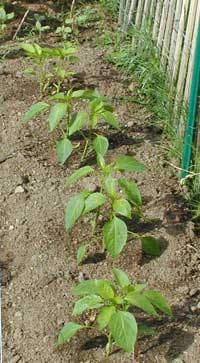
Mike P. planted the pepper seedlings on May 29, Memorial Day Weekend, three varieties:

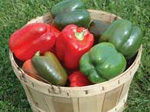
Lady Bell, a sweet bell pepper from Busa Farm.


Lady Bell sweet pepper

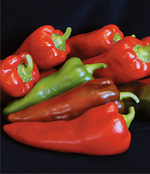
Carmen, a Mediterranean sweet pepper from Waltham Fields.

Carmen pepper

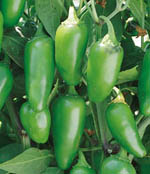
Jalapeno, a hot pepper, donated by a neighbor, Robin.

Jalapeno hot pepper

Mike planted the seedlings using a standard successful method:

    1. Scoop the soil out of the planting hole, a little bit bigger than the hole you need;
  1. Throw in a handful of compost and a bit of fertilizer;
  2. With some loose soil in the bottom to correct the depth, position two seedlings* so the soil lines match the surrounding ground level;
  3. Fill the hole halfway with soil;
  4. Fill the hole with water to soak the soil around the seedlings’ roots;
  5. Fill the hole the rest of the way with soil;
  6. Build a little dike around the stem to help catch water.

* We doubled up on pepper seedlings – two to a hole, an inch or two apart. Pepper plants are kind of “loose” and let a lot of sun through the leaves. Growing two side-by-side helps shade the fruit from sun scald, and practically doubles the yield in the space available.
Filed Under: Uncategorized

Radishes

May 31, 2010 by Elisabeth


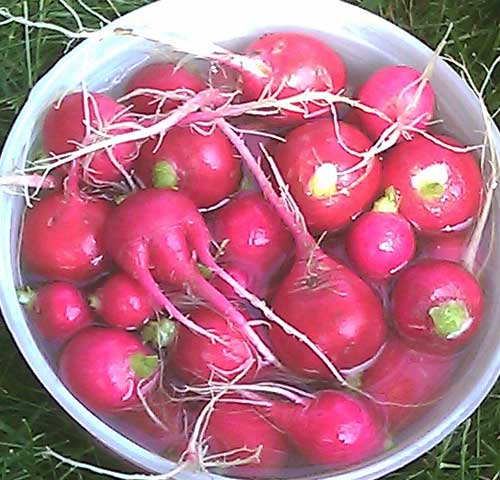
There is no more to say…

Filed Under: Uncategorized

Cauliflower trouble

May 30, 2010 by Elisabeth

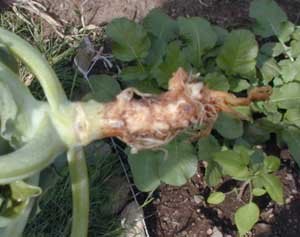
Root maggotsTwo of the cauliflower seedlings have been looking pretty bad. I pulled them today and replaced them with two new red cabbage plants from Busa Farm. Upon examination, we found at least one root maggot and a lot of damage.
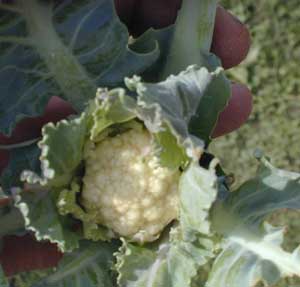
Cabbage root maggots are the larval stage of Baby caulflowerthe cabbage root fly. There’s not much you can do once you have root maggots, and our only hope is that the other brassicas are strong enough to grow in spite of possible infestation. We’ve already pulled a few cabbages with the same problem. So far, the brocolli doesn’t seem to have been effected.
http://www.cedarhills.org/line-of-credit-with-no-credit-check

The only effective prevention for cabbage root maggots is to grow the seedlings under an impenetrable tent or cloche until they’ve grown big enough to survive an infestation. It also helps sometimes to plant later than usual, after the first generation of the flies is past. I took the damaged seedlings home to compost, since we don’t grow brassicas at home.

Sadly, this little damaged plant had already produced a perfect miniature cauliflower bud.

Filed Under: Uncategorized Tagged With: cabbage

Peas’ progress

May 30, 2010 by Elisabeth

We planted all our peas on April 21, so this is where they are after about 38 days in the ground. We planted three varieties:

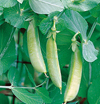
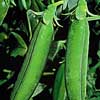
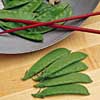
Pioneer, a bush shell pea from Seeds of Change. Est 55-70 days to harvest. Oregon Sugar Pod, a bush snow pea,  from Burpee. Sugar Snap,  a vining sugar snap pea, from Johhny’s. Est 62 days to harvest.
Pioneer shell pea Oregon Sugar Pod Sugar Snap

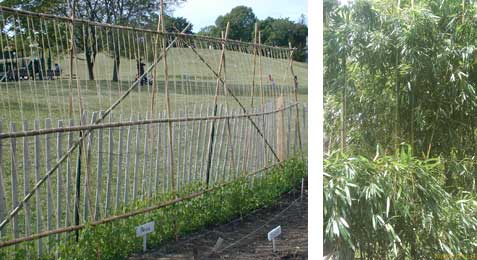
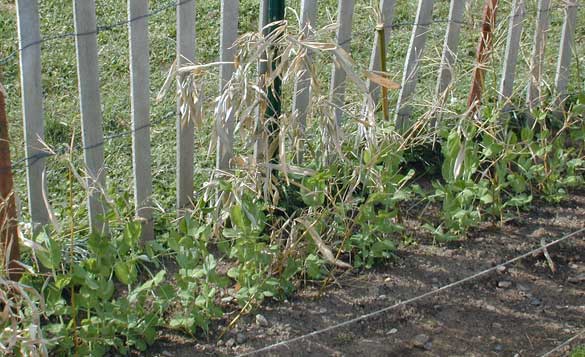
Bamboo pea and bean fence pea brushWe had good germination rates from all of them. Building the trellis
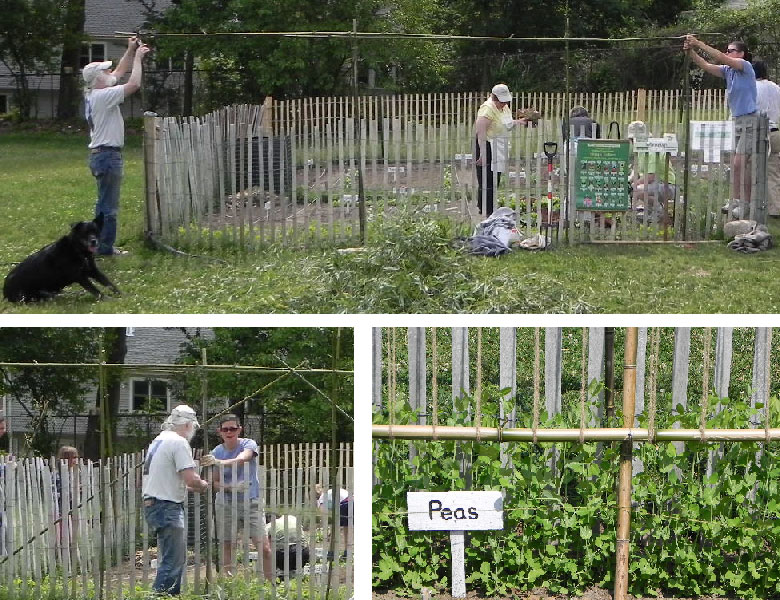
Sugar Snaps will grow 6 ft and taller, so we needed a substantial support for them. Erika, Steven and Alan engineered and constructed a framework using bamboo that has escaped from a neighbor’s yard into Oakes’ yard. Bamboo is extremely invasive, but very useful in the garden. 

For the bush peas, we used the trimmings from the bamboo as pea brush, just sticking them in the ground over the peas to give them a little support. They’ll also be leaning on the fence.

Filed Under: Uncategorized

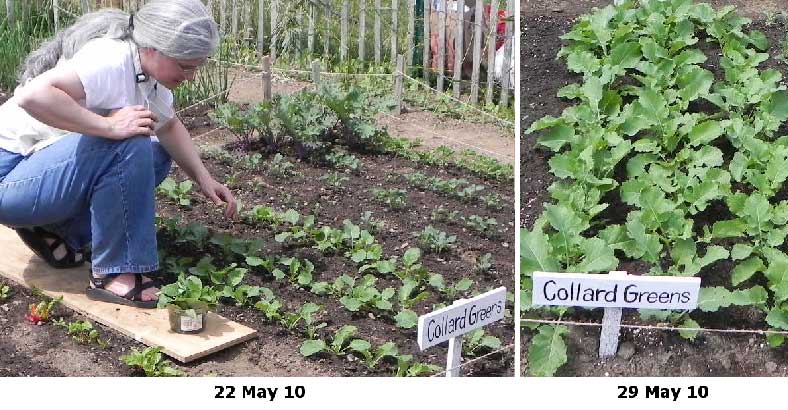
Collards’ progress

May 29, 2010 by Elisabeth

Filed Under: Uncategorized

Cukes go under

May 26, 2010 by Elisabeth

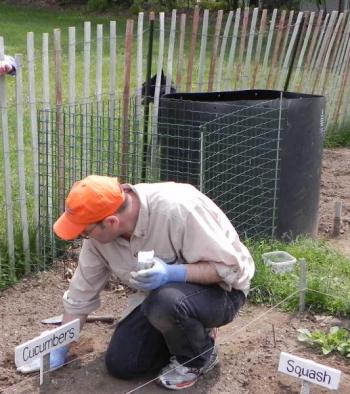
PlantingSaturday we planted cucumber seeds, 2 at a time, in 2-foot intervals along either side of the compost bins. We waited till now because cucumbers don’t like cool soil. They are not as finicky as tomatoes and eggplants, the prima donnas that go in next week, but they are real pansies compared, say, to radishes and peas.

Back 120 years ago, cucumbers were a luxury vegetable, served mostly in high-priced hotels like the Parker House over in Boston. At that time, Arlington was the cucumber capital of the United States. It was home to the country’s most famous slicing cucumber, the Arlington White Spine, a great- great-grandchild of which we have just planted here.

Arlington farmers grew cukes during the winter months and early spring in greenhouses, where they kept the soil and the air warm with a combination of steam boilers and daily infusions of horse manure from carriage operators over in Cambridge.

Off-season, for special events, Arlington cukes fetched as much $1 each from wealthy Bostonians. During the summer months they could still get as much as 40 cents each. (To convert those prices into reasonable estimates in today’s dollars, multiply by 22. That’s the Consumer Price Index multiplier for 1913, the first year for which the index was established.)

Eventually the Arlington White Spine fell out of favor as a retail cucumber, though it still goes strong as a breeder. How it lost its position in grocery stores is a long story, one we’ll tell you later sometime. As a breeder, however, Arlington White Spine  remains the Man ‘o War of slicers, claiming more direct descendents than almost any other rival.

Filed Under: Notes to the Future Tagged With: eggplant, tomato

« Previous Page
Next Page »

Primary Sidebar

2026

  • 2026 Crops List
  • 2026 Garden Plans
  • 2026 Garden Schedule
  • 2026 Watering Schedule
  • 2026 Photos

2025

  • 2025 Crops List
  • 2025 Garden Plans
  • 2025 Garden Schedule
  • 2025 Watering Schedule
  • 2025 Photos
  • 2025 Finances

2024

  • 2024 Crops List
  • 2024 Garden Plans
  • 2024 Garden Schedule
  • 2024 Photos
  • 2024 Finances

2023

  • 2023 Crops List
  • 2023 Garden Plans
  • 2023 Garden Schedule
  • 2023 Photos
  • 2023 Finances

2022

  • 2022 Crops List
  • 2022 Garden Plans
  • 2022 Garden Schedule
  • 2022 Photos
  • 2022 Finances

2021

  • 2021 Crops List
  • 2021 Garden Plans
  • 2021 Garden Schedule
  • 2021 Photos
  • 2021 Finances

2020

  • 2020 Crops List
  • 2020 Garden Plans
  • 2020 Garden Schedule
  • 2020 Finances
  • 2020 Photos

2019

  • 2019 Crops List
  • 2019 Garden Plans
  • 2019 Garden Schedule
  • 2019 Finances
  • 2019 Photos

2018

  • 2018 Crops
  • 2018 Garden Plans
  • 2018 Garden Schedule
  • 2018 Photos
  • 2018 Finances

2017

  • 2017 Crops
  • 2017 Garden Plans
  • 2017 Crop Schedule
  • 2017 Photos
  • 2017 Finances

2016

  • 2016 Crops
  • 2016 Garden Plans
  • 2016 Crop Schedule
  • 2016 Finances
  • 2016 Expenses

2015

  • 2015 Crops
  • 2015 Garden Plans
  • 2015 Crop Schedule
  • 2015 Finances
  • 2015 Expenses

2014

  • 2014 Crops
  • 2014 Garden Plan
  • 2014 Crop Schedule

2013

  • 2013 Crops List
  • 2013 Garden Plan
  • 2013 Crop Schedule
  • 2013 Photos

2012

  • 2012 Crops
  • 2012 Garden Plan
  • 2012 Crop Schedule

2011

  • 2011 Crops
  • 2011 Seeds
  • 2011 Garden Plan
  • 2011 Expenses
  • 2011 Project Proposal
  • 2011 Supporters

2010

  • 2010 Crops
  • 2010 Seeds
  • 2010 Expenses
  • 2010 Supporters
  • 2010 Veggie Adoptions
  • 2010 Pilot Project Report

Recipe Collection

Log In

Members Only

  • Contact information
  • Log Out

Secondary Sidebar

Copyright © 2026 · Genesis Child Theme for Robbins Farm Garden on Genesis Framework · WordPress · Log in