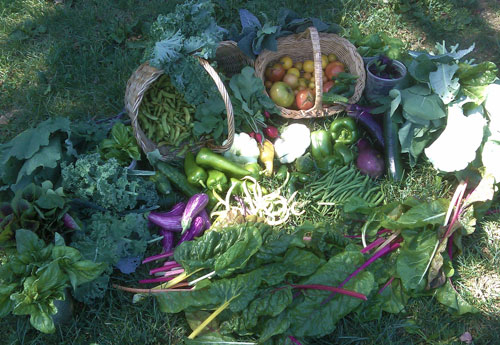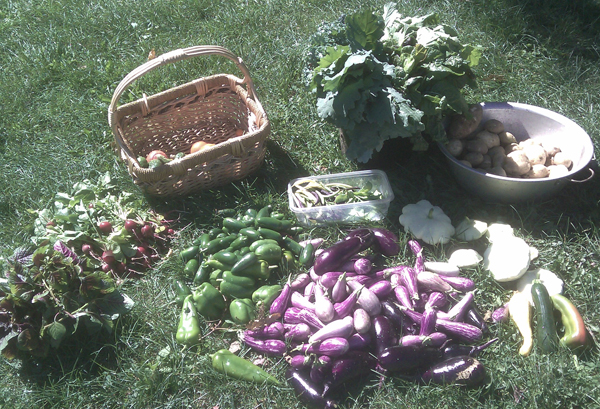
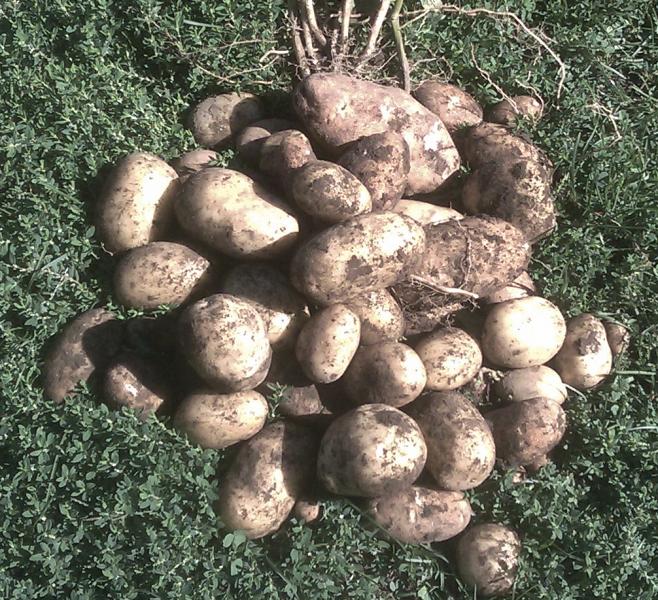
Today we dug the second row of potatoes and pulled the radishes from where the first potatoes were dug. And we picked a few eggplant. Ratatouille, anyone?
A Cooperative Learning Project
Today we dug the second row of potatoes and pulled the radishes from where the first potatoes were dug. And we picked a few eggplant. Ratatouille, anyone?
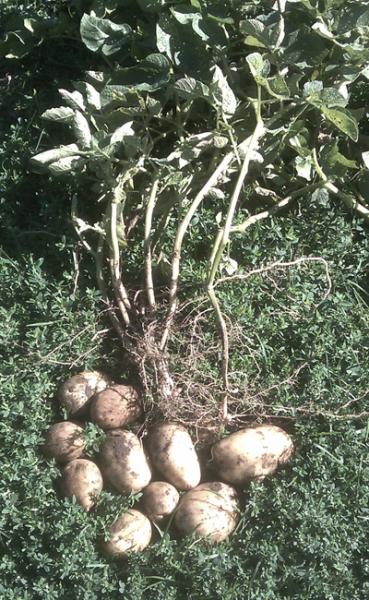
This is how many potatoes we got from one plant, and from a row about 5 ft long. That one plant came from just a piece of one potato. The whole row is from 2 or 3. Pretty darn good R.O.I., eh?
Mildew attacked the leaves of cucumber plants and zucchini (and other summer squash) plants this summer. Despite this, we harvested abundant quantities of each, so one could just call this part of our ecological tithe, especially since we weren’t eating the leaves. Yet there was enough concern that we did try to address the problem.
We altered our watering, so as not to water from above near these plants (as well as the tomatoes, given the threat of tomato blight). Water on leaves helps spread disease, and it’s water into roots which counts. We added a soaker hose in the area of these plants as well.
We also tried a couple pesticides. The first was a dilute mixture of hydrogen peroxide. The effectiveness was questionable, requiring multiple regular applications to seem to work. The second was baking soda and soybean oil (vegetable oil) diluted in water: about a tablespoon of baking soda with a half gallon of water; the oil helps the baking soda stick to the leaves. A few days later, many of the leaves of the squash plants appeared free of mildew. However, it is unclear how much of this is new growth unyet touched by mildew, since we cleared away the dead leaves.
I expected the pole beans to have reached the top of the trellis by now, which the peas did. While a few runners reach high, most are about halfway up. Also, many of the leaves nearest the ground have yellowed, usually an indication of some nutrient deficiency. The usual culprit is lack of nitrogen, but beans being legumes put nitrogen in the soil, as do the peas preceding them. Alan added some chicken manure.
Last Saturday, we harvested the last of the soybeans. We did not stagger the planting, so (unlike bush beans or pole beans) soybeans become ready to harvest about the same time. Despite this, we manage to spread out our takings over four weeks.
Lots of visitors again today!